

October 17, 2026
Pick embroidery for small, premium logos on structured garments like polos and caps, where wear matters. Pick printing for large, detailed or photographic logos and short, cost-sensitive runs. Embroidery gives texture and longevity, while printing gives fine detail across big areas. Wash outcomes also depend on care labelling under ISO 3758 and AS/NZS 1957, and our team at PromoShop can guide you.
TL;DR:
- Embroidery struggles with tiny text, thin lines, gradients, and photographs; simplify fine strokes and use DTG or heat transfer for shaded artwork.
- Digitizing adds a one time embroidery cost, while screen printing requires a screen for each color; DTG and heat transfer suit short runs.
- Choose embroidery for structured polos, caps, and jackets, but seek specialist advice for stretch knits or waterproof outerwear, where stitching can distort or puncture coatings.
- Follow garment care labels under ISO 3758:2023 and AS/NZS 1957:1998; wash inside out, avoid harsh detergents, and never iron directly over logos.
- Before ordering, confirm the method’s minimum quantity, request a proof or sample, and provide vector artwork, final placement size, and Pantone or CMYK references.
Table of Contents
- What embroidery delivers on a finished garment
- What printing delivers: screen print, DTG and heat transfer
- Can your logo be reproduced well by each method?
- How do embroidered and printed logos hold up in the wash?
- Which garments and placements suit each method?
- When does each method save you money?
- How do you choose? A checklist and supplier questions
- How we help you get the right finish
- Quick notes for marketing teams, event organisers and uniform managers
- Ready to order? Here is how to start with us
- FAQ
- Sources
What embroidery delivers on a finished garment
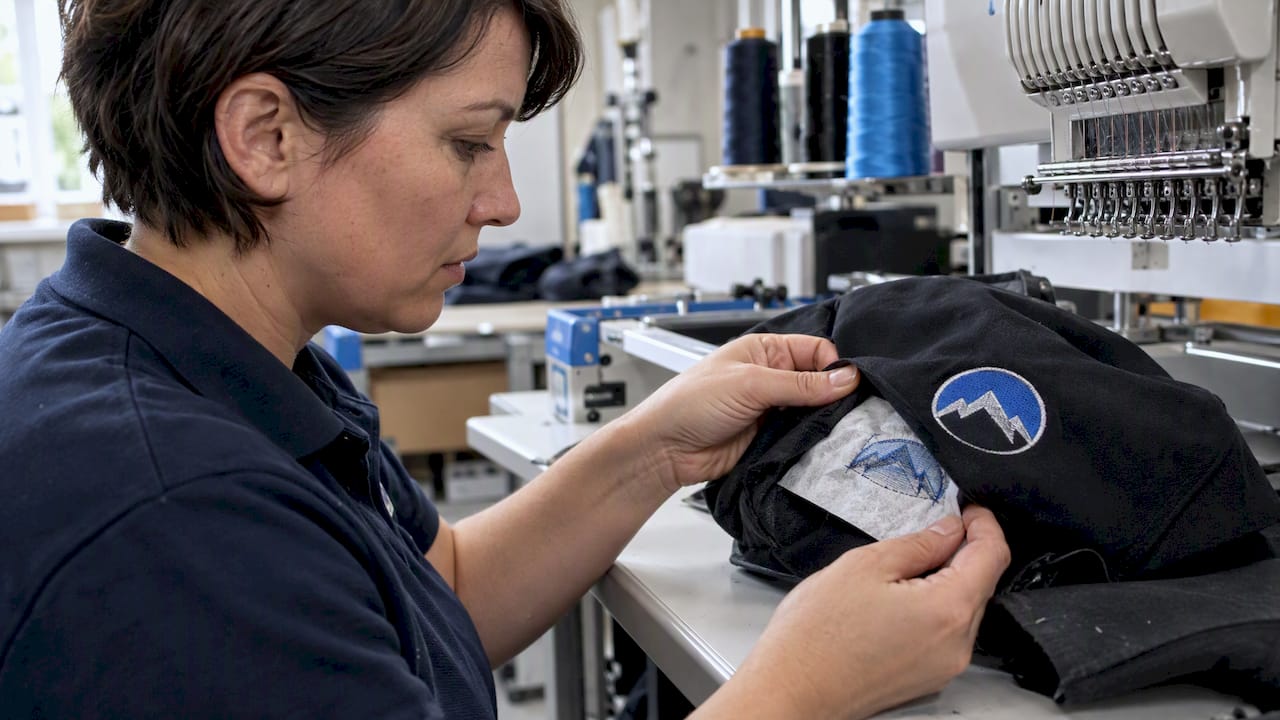
Embroidery builds your logo from thread. The result is a raised, textured finish that looks premium and sits well on corporate wear. Most designs use satin stitches for borders and text, fill stitches for larger areas, and outlines for definition.
Here is where embroidery earns its place:
- A professional, tactile look that suits uniforms and client-facing staff.
- Long wear on structured garments such as polos, caps and jackets.
- A good fit for name badges and small chest logos.
- Fine lines, tiny text and photographic detail do not stitch well, so very small lettering needs a minimum size.
Colour blends and gradients are also hard to stitch. The thread has a fixed colour, so a shaded logo usually has to be simplified into solid blocks. If your brand relies on subtle fades, printing will follow the artwork more faithfully.
Pro Tip: Ask whether your supplier uses stabiliser (backing) under the fabric. Without it, the garment shifts during stitching and the logo puckers or distorts.
What printing delivers: screen print, DTG and heat transfer
Printing puts ink or film on top of the fabric, so the finish is flat, bright and smooth. It copes with large areas far better than stitching does. There are several methods you will see quoted:
- Screen printing: best for bold, solid colours and larger runs. Each colour needs its own screen, so simple logos suit it best.
- DTG (direct to garment): prints the design like a desktop printer would, which makes it good for photographic detail and small runs.
- Heat transfer or vinyl: flexible for low quantities and special effects such as metallic or reflective finishes.
The visual difference is clear. A printed logo lies flat and can show gradients and photos. An embroidered logo stands up from the fabric and shows thread texture. Printing also has method-specific limits. Screen printing needs colour separations, and durability under washing varies from one method to the next. For low quantities, our guide on heat transfer versus screen print explains when heat transfer is the better pick. You can also see the full range on our printing options page.
Can your logo be reproduced well by each method?
Your artwork decides the method more often than your budget does. Use these rules of thumb before you commit.
Embroidery handles thick strokes and clear shapes. Very thin lines and tiny text can fill in as the stitches pack together. Higher stitch density adds weight, so small, fussy details blur.
Printing handles detail, but image quality matters. Photos and gradients suit DTG or heat transfer, while screen printing suits flat colour. For large prints, resolution is the key check, and this image resolution guide for signage explains what DPI to aim for.
To prepare your artwork:
- Supply vector files (such as AI, EPS or SVG) wherever you can.
- Convert very thin strokes into solid shapes.
- Include Pantone or CMYK colour references.
- Check the final size against our logo size on shirts guide.
Pro Tip: Send your logo at its real print size. A design that looks fine on screen can lose its small text once it is shrunk to a chest placement.
How do embroidered and printed logos hold up in the wash?
Both methods last well when the garment is cared for properly. They just fail in different ways. Embroidery can fray if threads catch or loosen. Printing can crack or fade, depending on the method and how often the garment is washed.
Care labelling plays a big part. ISO 3758:2023 sets out graphic symbols for domestic washing, bleaching, drying and ironing, designed to prevent irreversible damage during textile care. In Australia and New Zealand, AS/NZS 1957:1998 covers care-labelling phrases and symbols and how that information reaches the purchaser.
Practical habits that extend logo life:
- Turn garments inside out before washing.
- Use a cool or warm cycle and avoid harsh detergents.
- Skip the hot dryer where the label advises against it.
- Do not iron directly over a print or stitching.
Care labels exist to prevent damage: ISO 3758:2023 describes its care symbols as guidance that helps avoid irreversible harm to textiles. Following the label protects the logo as well as the fabric.
Which garments and placements suit each method?
Match the method to the fabric first, then to where the logo sits.
Embroidery tends to work best on:
- Polo shirts and other structured, mid-weight knits.
- Caps, especially across the front panel.
- Thicker outerwear and workwear jackets.
Printing tends to work best on:
- Lightweight tees where stitching could pucker the fabric.
- Large, full-front or back designs.
- Flags and banners, where size and flat colour matter.
Some garments need extra thought. Stretch knits can distort stitching, and waterproof or technical outerwear can be damaged by needle holes, so these need a specialist approach. For placement, a left-chest logo suits both methods, sleeves and collars suit small embroidery, and a cap front suits embroidery. Our polo shirt branding page shows logo options for corporate polos.
When does each method save you money?
Set-up is the first cost driver. Embroidery needs your logo digitised into a stitch file. Screen printing needs a screen made for every colour. Both are one-off costs that spread thinly across big orders but weigh heavily on small ones.
Unit cost then moves with quantity:
- Embroidery has a steady per-piece cost that rises with stitch count.
- Screen printing gets cheaper per item as the run grows.
- DTG and heat transfer have little set-up, so they suit short runs.
Printing usually saves money on large or photographic jobs. Embroidery’s premium is worth paying when you want a lasting, professional look on staff garments.
How do you choose? A checklist and supplier questions
Work through the decision in order: define the use and lifespan, check garment compatibility, check how much detail your logo has, then pick a method based on run size and budget.
Before you order, ask your supplier:
- What is the minimum order for this method?
- Can I see a proof or sample first?
- Which file formats do you need?
- What is the turnaround time?
- Which placement and care instructions do you recommend?
Then run through your artwork handover:
- Vector file, plus a high-resolution backup.
- Size in centimetres for each placement.
- Pantone or CMYK colour references.
- Notes on garment colour, since light thread or ink behaves differently on dark fabric.
Our branding guide covers placement basics if you are still deciding where the logo should go.
How we help you get the right finish
We guide you from the first artwork check to the finished product. Our services include free artwork design, custom branding, express service and a Price Beat Guarantee, which gives you buyer protection on price.
Here is where we commonly steer customers:
- Embroidered polos and caps for staff and corporate wear.
- Printed tees for events and giveaways.
- Printed flags, pennants and car flags for large-format branding.
We also help at the artwork stage. Our team checks file quality, simplifies details that will not stitch well, and supports proof and sample stages so there are no surprises when your order arrives. If a design needs adjusting, we say so early rather than after production starts.
Quick notes for marketing teams, event organisers and uniform managers
Marketing teams should match the finish to the brand’s tone and how long the campaign will run. Event organisers will usually do better with printing for giveaways and large-area designs. Uniform managers should lean towards embroidery for durability and a polished look.
— PromoShop
Ready to order? Here is how to start with us
Tell us what you need and we will recommend the finish. We offer free artwork design, express service and a Price Beat Guarantee. Request a quote or ask for a sample or proof through PromoShop if you are unsure which method suits your logo.
These products pair well with printing and large-format branding:
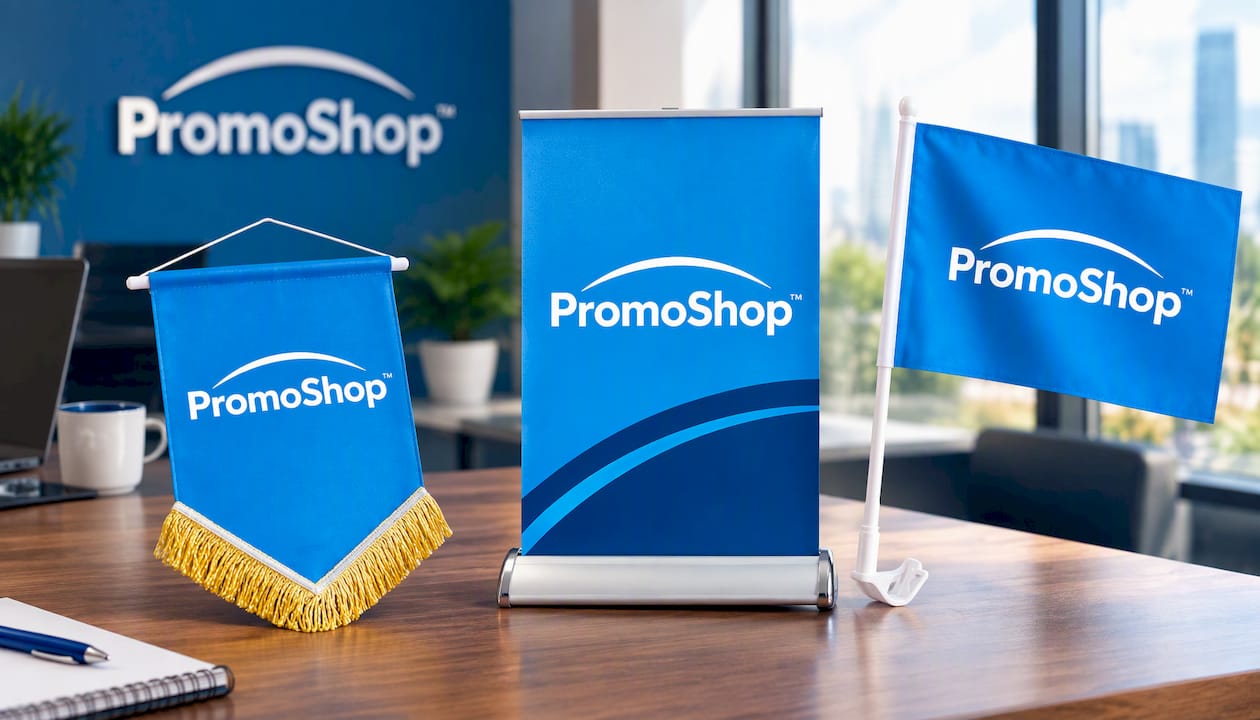
- Pennants: commonly printed for events and displays.
- Table Top Pull Up Banners: flat, bright print suits counters and trade stands.
- Car Flags: printed for visibility and promotions on the move.
Get in touch and we will help you choose.
FAQ
Is embroidery better than printing for logos?
It depends on the logo and the garment. Embroidery suits small, simple logos on polos and caps, while printing suits large or detailed designs.
Which lasts longer, embroidery or printing?
Both last well with proper care. Embroidery can fray, while prints can crack or fade, so follow the care label under ISO 3758:2023.
Is screen printing cheaper than embroidery?
For large runs of simple designs, screen printing is often cheaper per item. For short runs, heat transfer or DTG avoids screen set-up costs.
Can embroidery reproduce gradients or photos?
Not well. Thread comes in solid colours, so gradients and photos are better suited to DTG or heat transfer.