


October 8, 2026
For short runs with photo-like detail, choose heat transfer. For larger runs of bold, hard-wearing designs, choose screen printing. Polyester garments and certain hard goods often suit a transfer process like sublimation better than ink-on-fabric screen printing. We’ll walk through the trade-offs below so you can match the method to your actual job.
TL;DR:
- Screen printing offers superior durability on cotton fabrics and is more cost-effective for large-volume orders exceeding a few hundred pieces.
- Heat transfer is better suited for short runs under approximately 50 pieces and handles complex, photographic, or multi-color designs with ease.
- Proper artwork preparation is crucial, with vector files for screen printing and high-resolution images for transfers, and physical proofs are strongly recommended before production.
- Transfer costs are typically per design, making them more affordable for small or one-off orders, while screen printing’s fixed setup costs favor bulk runs.
- Each method’s suitability depends on fabric type, design complexity, order size, and intended durability, requiring careful matching to ensure quality and cost efficiency.
Table of Contents
- Heat transfer vs screen printing: comparing durability, cost and quality
- Which fabrics and product types suit each printing method
- Getting your artwork ready for each printing method
- How pricing, minimum orders and lead times compare
- Why 25 years in branded merchandise changes how we quote
- Practical pitfalls and quick tips from our production floor
- Ready to order? Here’s how to get a quote or sample
- FAQ
- Sources
Heat transfer vs screen printing: comparing durability, cost and quality
Durability is where screen printing usually wins. Properly cured plastisol ink sits in the fibres and resists cracking far longer than many transfer films, which can peel at the edges after repeated washing. Screen printing on fabric is applied across many product types specifically because it combines quality, durability and economies of scale, which is why it remains the standard for workwear, team kits and anything that gets washed often.
Cost works the other way for small jobs. Screen printing needs a new screen for every colour, so setup costs are fixed regardless of quantity. Heat transfer skips that step, which makes it competitive for short runs even though the per-piece cost stays higher as volume grows.
A few practical guideposts:
- Small runs (under roughly 25 to 50 pieces): heat transfer usually wins on total cost once you factor in screen setup.
- Large runs (hundreds of pieces): screen printing’s per-piece cost drops sharply, making it cheaper overall.
- Multi-colour or photographic designs: heat transfer handles gradients and fine detail that would need many separate screens otherwise.
- Bold, one to three colour logos at volume: screen printing gives the cleanest, flattest finish and the best price per piece.
Screen printing is regularly used on textiles for its combination of print quality and economies of scale. That scale effect is the main reason bulk apparel orders default to screens rather than transfers.
Failure modes differ too. Screen prints crack or fade mainly from under curing or poor fabric prep. Heat transfers peel when the press temperature, pressure or dwell time is off, or when the wrong film is matched to the fabric.
Which fabrics and product types suit each printing method
Screen printing performs best on cotton and cotton-heavy blends. The ink bonds well with natural fibres and holds up under heavy wear, which is why it’s the default for t-shirts, tote bags and heavier workwear.
Heat transfer variants split by fabric too. Vinyl and printed transfers work across cotton and polyester, but sublimation transfer is built specifically for polyester and polyester-coated hard goods, since the dye bonds into the polymer rather than sitting on top of it.
Beyond apparel, the right method depends on the item:
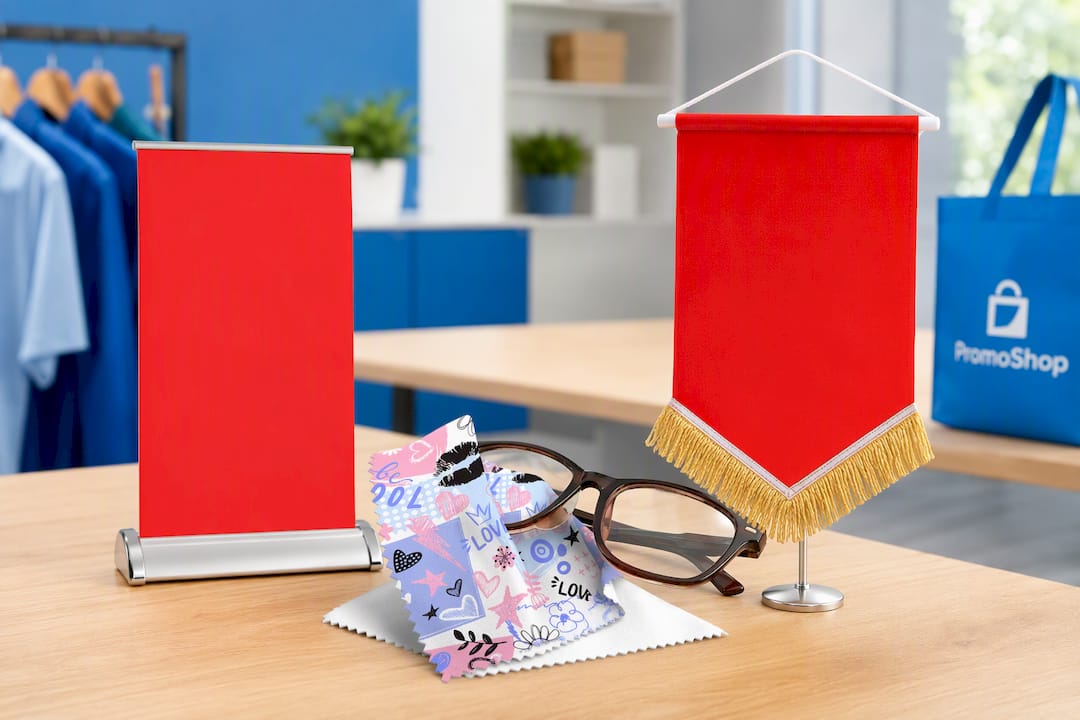
- Soft goods like an RPET microfibre cleaning cloth often suit a transfer or sublimation process because of the synthetic fibre content.
- Fabric pennants are commonly produced with screen printing or dye sublimation depending on the base fabric and colour count.
- Hard-sided items like table top pull up banners rely on digital or transfer printing onto the banner material rather than screen printing.
Avoid heat-sensitive synthetics under high press temperatures, and avoid fine photographic detail on heavily textured fabric: both will disappoint you at full production.
Getting your artwork ready for each printing method
Screen printing wants vector artwork with clearly separated spot colours. Thin lines and tiny text can drop out, so most printers ask for a minimum stroke width before setting up screens. Heat transfer, including photographic and sublimation transfers, needs high-resolution files instead, ideally 300 DPI or better, saved as CMYK or a high-res PNG or TIFF.
A simple submission checklist:
- Confirm the print method first, since it determines the file type.
- Send vector files (AI, EPS, PDF) for screen printing jobs.
- Send high-resolution raster files for photographic or sublimated transfers.
- Flag any metallic, puff or specialty ink effects before proofing.
- Request a physical or digital proof before full production.
Our branding guide covers file formats and colour handling in more depth if you’re preparing artwork from scratch. Resolution matters more than people expect: a practical guide to image resolution explains how DPI requirements shift with print size and viewing distance, which applies just as much to transfers as to signage.
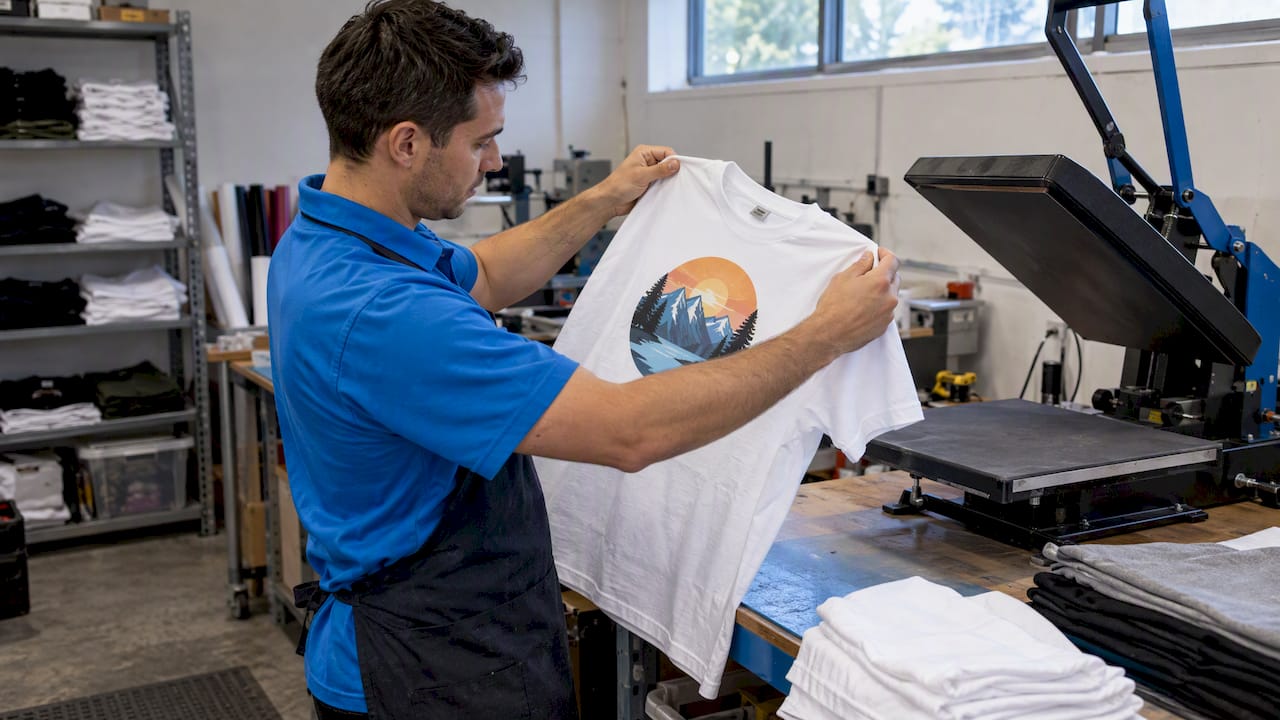
Pro Tip: Always ask for a physical proof on the actual garment or substrate, not just a digital mock-up, before approving a full production run.
How pricing, minimum orders and lead times compare
A screen print quote usually has three parts: screen setup, per-piece printing and any finishing. Heat transfer quotes swap screen setup for a transfer cost per design, which can still vary by size and colour count.
- Setup cost: screens are charged per colour; transfers are typically priced per design regardless of colour count.
- Minimum order quantities: screen printing often has a higher practical MOQ to justify setup; heat transfer suits low-volume or one-off orders.
- Lead times: both methods run on similar base timelines, but express service can compress turnaround when you’re against a deadline.
- Break-even point: once a run grows large enough, screen printing’s lower per-piece cost usually overtakes transfer pricing.
If your run is small or urgent, heat transfer’s lack of setup cost often outweighs its higher per-piece price. See our printing options overview for how these costs typically stack up against each other.
Why 25 years in branded merchandise changes how we quote
We have extensive experience with both printing methods, sourcing factory-direct to maintain consistent quality and competitive pricing. That experience shapes how we match a method to a job rather than defaulting to whichever press happens to be free.
We include artwork design services with quotes to ensure your files are checked and adjusted for the chosen method before printing. Express service is available for urgent timelines, and our Price Beat Guarantee applies across the catalogue, including items where the printing method varies by product.
Practical pitfalls and quick tips from our production floor
The most common mistake is choosing a method before the design is finalised. Overly detailed artwork sent for screen printing gets simplified anyway, costing time. Order a sample run before committing to volume, and ask which ink or film suits your fabric before locking in a design. A wash test catches problems a proof never will.
— PromoShop
Ready to order? Here’s how to get a quote or sample
Getting started is simple. Tell us your product, fabric and rough quantity, and we’ll recommend the method that fits.
- Send your logo or design file along with the product and quantity you’re after.
- Ask for a sample before full production if you’re unsure which method suits your fabric.
- Check our table top pull up banners or browse the full range at PromoShop to see pricing and turnaround for your product.
FAQ
What lasts longer, screen print or heat press?
Screen printing generally lasts longer on cotton and cotton-blend garments because the ink bonds into the fibres and resists cracking through repeated washing. Heat transfers can last just as well when matched to the right fabric and pressed correctly, but poor substrate matching shortens their lifespan faster than it does for screen prints.
What are the disadvantages of heat transfer printing?
Heat transfer carries a higher per-piece cost as order volume grows, making it less economical for large runs. It can also be more sensitive to press temperature and fabric type, with the wrong combination leading to peeling or cracking sooner than a well-cured screen print.
What is better quality, DTF or screen printing?
Neither is universally better. Screen printing tends to deliver a flatter, more durable finish on bold, low-colour designs at volume, while transfer methods handle photographic detail and high colour counts that would be impractical to screen print.
Is DTF replacing screen printing?
Digital transfer methods have grown alongside screen printing rather than replacing it, since university textile courses now teach both digital and screen print design as complementary skills. Screen printing still holds the edge for large, simple-design runs, while digital and transfer methods suit shorter runs and complex artwork.