
October 9, 2026
The best promotional product ideas fall into four categories: wearables, drinkware, tech accessories and eco essentials. Choose one campaign goal first (events, acquisition, onboarding, retail or sustainability), then match the item to that goal and your budget. Options like the Shoe Bag, Oval Tee Caddy and Pillow Pack – 55mm Tees are ready to order now.
TL;DR:
- Runs of 50 to 100 units cost more per item; 250 to 500 often cost less, while orders above 1,000 usually get the lowest rates.
- Request a sample and check print alignment, stitching, and durability before approving production; confirm lead times and replacement terms in writing.
- Use environmental claims only when suppliers provide material specifications, certifications, or audited reports, and tie each statement to the specific product feature it describes.
- Give giveaway entrants a clear choice about receiving marketing messages, provide unsubscribe or STOP options, and retain a timestamped consent record.
- Ask suppliers to itemize product, setup, artwork, freight, storage, distribution, and tax, since setup and artwork fees can surprise first time buyers.
Table of Contents
- Promotional product ideas grouped by campaign goal
- How to choose the right promotional items for your campaign
- Budgeting, fulfilment and record-keeping for promo campaigns
- Sustainability claims: avoiding greenwashing risk
- Why PromoShop is a practical choice for small business orders
- Collecting contact details at your giveaway without breaching privacy rules
- Matching promo items to who’s actually going to use them
- How minimum order quantities shape your price and your storage
- Recommended suppliers and what reputable sourcing looks like
- Quality control: what to check before you commit to a full run
- Packaging choices that make a cheap item feel like a gift
- When physical merch beats another round of digital ads
- Get a quote and start your order
- FAQ
- Sources
Promotional product ideas grouped by campaign goal
Different goals call for different items. Here’s how to match them.
Event giveaways need to survive a busy expo floor and still get taken home.
- Branded tote bags or drawstring bags, good for 100 to 500 units at a trade show
- Stress balls or fidget toys, cheap fillers for 250+ unit runs
- Lanyards and name badge holders, useful for conferences with 50 to 1,000 attendees
- Pillow Pack – 55mm Tees, a compact folded tee that works well as a small-batch apparel giveaway without the bulk of boxed shirts
- Caps or bucket hats, memorable for outdoor events
- Branded power banks, a premium option for VIP guest lists
- Stickers and temporary tattoos, near-zero cost for kids’ zones or festivals
Customer acquisition items should create a reason to remember you after the first interaction.
- Drink bottles with a clean one-colour logo, suited to 100 to 300 unit orders
- Branded notebooks paired with a pen, a classic pairing for consultations or sign-ups
- USB drives preloaded with a welcome pack
- Reusable coffee cups, a daily-use item that keeps your logo visible
- Mini first aid kits or hand sanitiser, practical enough to stay in a bag
- Phone grips or pop sockets, low-cost and high-visibility
Employee onboarding gifts set the tone for a new hire’s first week.
- Branded apparel such as polos or hoodies through the Oval Tee Caddy for easy sizing and folding
- Desk accessories: mouse pads, pen holders, sticky note cubes
- Welcome hampers with a mix of drinkware and snacks
- Water bottles or insulated mugs with the company logo
- Laptop sleeves or backpacks for remote or hybrid staff
Retail and point of sale items work best when they reinforce a purchase rather than interrupt it.
- Shoe Bag, useful for footwear retailers bundling a branded carry bag with every pair sold
- Branded till receipts or loyalty cards
- Counter displays with small giveaway bowls (mints, stickers)
- Gift-with-purchase items tied to a spend threshold
Sustainability-focused items suit brands that want their values reflected in what they hand out.
- Reusable produce bags or beeswax wraps
- Bamboo pens or recycled plastic notebooks
- Seed packets or plantable stationery
- Organic cotton tote bags
Pro Tip: Keep artwork to one or two colours and a single imprint area. It speeds up setup, reduces errors on proofs and usually keeps customisation costs down.
For low-cost staples like pens and stickers, order in bulk and keep a simple design on hand so you can reorder quickly. Mid-range keepsakes such as drink bottles and caps suit customer-facing campaigns where you want the item kept, not binned. Premium options like branded apparel and tech accessories work best for smaller, higher-value audiences such as VIP clients or long-term staff.
How to choose the right promotional items for your campaign
Run through this sequence before you place an order.
- Define the goal. Decide whether this run is for acquisition, retention, events or internal culture.
- Know your audience. Match the item to what they’ll actually use, not just what looks good on a catalogue page.
- Check frequency of use. Daily-use items (drinkware, bags) build more impressions than one-off novelties.
- Set the budget per unit. Work backwards from total spend divided by quantity, including setup fees.
- Match the distribution channel. Mailed items need to survive freight. Handed-out items need to be light and quick to grab.
When you ask a supplier for a quote, ask about minimum order quantity, lead time, set-up or artwork fees, their proofing process before production and their returns policy on faulty stock. Expect small runs (50 to 100 units) to carry a higher per-unit cost, mid runs (250 to 500) to hit a sweeter price point, and bulk runs (1,000+) to unlock the lowest unit pricing. Be wary of suppliers who won’t give a clear lead time, make vague sustainability claims without backing detail, or skip artwork proofing altogether.
Budgeting, fulfilment and record-keeping for promo campaigns
A full quote should separate every cost line: product price, customisation or setup fee, artwork, freight, storage and distribution, plus tax. GST is charged at 10%, and registration is generally required once turnover reaches $75,000 (or $150,000 for some non-profits), according to Business.
- Ask for product cost, setup and freight as separate line items so nothing gets buried
- Consolidate SKUs where possible, fewer product types usually means better freight rates
- Keep quotes, artwork approvals, invoices and delivery notes together for each campaign
- Store these digitally so they’re easy to retrieve at tax time
Confirm setup and artwork fees before approving any order, since these are the costs most likely to surprise a first-time buyer.
Sustainability claims: avoiding greenwashing risk
If you’re promoting an “eco” product, the ACCC’s guidance on green marketing requires that environmental claims be truthful, specific and backed by evidence, not vague feel-good language. Updated ACCC guidance warns that unqualified statements and misleading visuals can create a false impression, so claims should point to the exact part of the product or process they describe.
Risky phrasing leans on broad, unverifiable words like “eco-friendly” or “green” with nothing behind them.
- Ask suppliers for material specs, certifications or audited reports before repeating a claim
- Avoid leaf icons or green colour schemes that imply a certification you can’t name
- Link any claim to the one part of the product it actually applies to
Pro Tip: If you can’t point to a certificate or a spec sheet, soften the claim or drop it. Our eco-friendly promotional products guide and guide to verifying sustainability claims can help you check before you commit.
Why PromoShop is a practical choice for small business orders
We have experience sourcing branded merchandise, combining factory-direct supply with artwork design services and a price beat guarantee on orders. The Shoe Bag, Oval Tee Caddy and Pillow Pack – 55mm Tees suit retail bundling, branded apparel runs and compact small-batch tee orders without the usual packaging bulk. Before requesting a quote, have your artwork file, target quantity and delivery date ready so we can turn it around quickly.
Collecting contact details at your giveaway without breaching privacy rules
If your giveaway or competition collects names, emails or phone numbers for follow-up marketing, OAIC’s guidance on Australian Privacy Principle 7 sets the rules. APP 7 requires that anyone you plan to contact for direct marketing has a clear, simple way to opt out, and that you handle their details lawfully from the point of collection.
In practice, this means your entry form should state plainly that entrants may receive marketing follow-up, and give them the choice to decline. Email campaigns need a visible unsubscribe link, SMS campaigns need a working “STOP” option, and phone follow-up needs a verbal opt-out that staff actually honour.
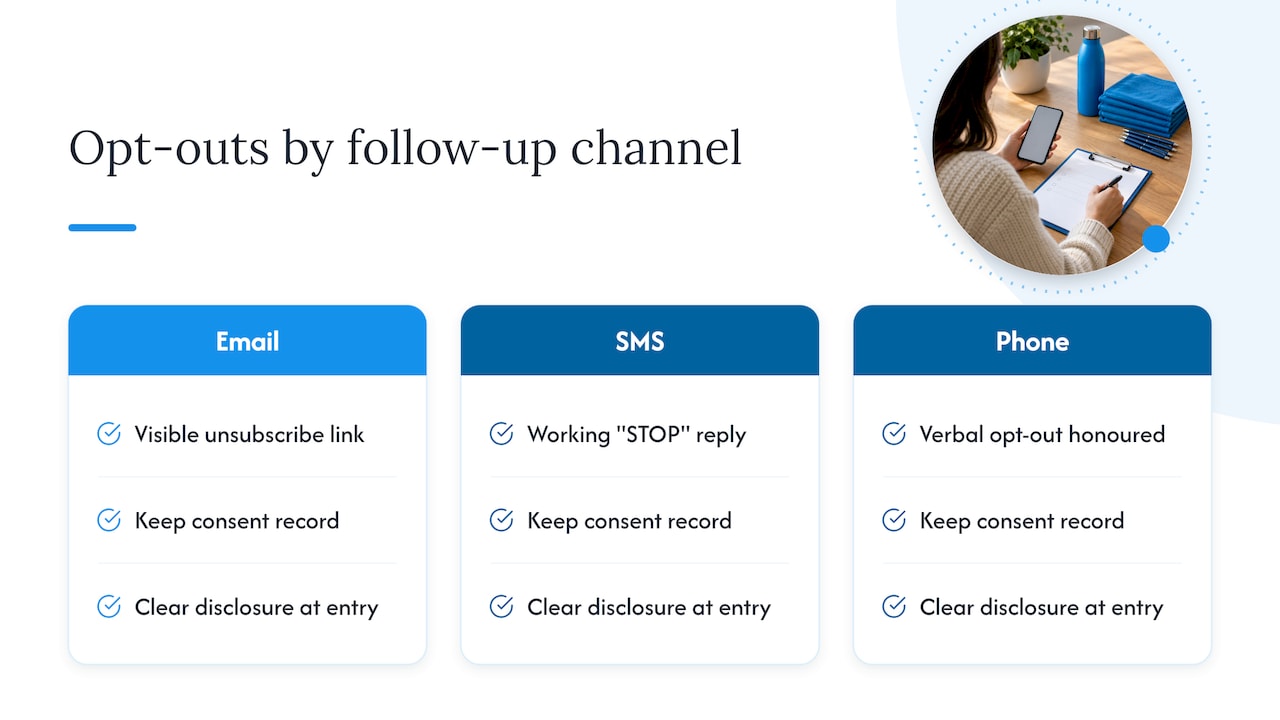
A QR code linking to a short opt-in form is usually simpler and safer than scribbling names on a clipboard at a stand, because it creates a timestamped record of consent. Keep that record. If someone asks why they’re receiving your emails six months later, you’ll want to show exactly when and how they agreed to it.
This matters more than it seems at first glance: a giveaway that captures leads without a clear consent trail can turn a marketing win into a compliance headache later.
Matching promo items to who’s actually going to use them
A branded stress ball means nothing to a 45 year old finance manager, and a leather folio means nothing to a uni student at a career fair. Start by picturing the person who’ll actually hold the item.
For younger, casual audiences, lean towards items with everyday utility and personality: phone accessories, drink bottles, caps. For corporate or executive audiences, better-finished items like notebooks, pens or desk accessories tend to land better than novelty giveaways. For trade and outdoor audiences, durability wins over polish: think tool pouches, caps, or sturdy bags over anything flimsy.
Think about where the item will actually be used, too. An item destined for a home office gets more daily visibility than one that’s shoved in a drawer after the event ends. Matching the item to a genuine habit, like making coffee, commuting, or working at a desk, is what turns a giveaway into a lasting impression rather than a one-off freebie.
How minimum order quantities shape your price and your storage
Minimum order quantities (MOQs) exist because setup costs, like screen printing plates or embroidery digitising, don’t scale down. A supplier running 50 units absorbs the same setup cost as one running 500, so the per-unit price drops sharply as quantity rises.
This creates a trade-off for small businesses. Ordering the minimum keeps your upfront spend low, but it often means paying a higher price per item and risks running out mid-campaign. Ordering well above the minimum lowers the per-unit cost but leaves you storing boxes of branded stock that take up space and tie up cash.
A practical middle ground is to order enough for your current campaign plus one planned follow-up, rather than guessing at a year’s supply. If you’re testing a new item for the first time, stick close to the MOQ until you know it performs, then scale the next order based on what actually got used or complimented.
Recommended suppliers and what reputable sourcing looks like
A reputable promotional products supplier should be upfront about where products come from, how customisation is produced, and what lead times to expect, rather than leaving you to chase answers after you’ve paid a deposit.
Look for suppliers who offer factory-direct sourcing rather than multiple resale layers, since each extra layer tends to add cost and reduce accountability if something goes wrong with a batch. Ask whether artwork proofing happens before production starts, not after, and whether the supplier will put a price beat guarantee or similar commitment in writing.
For businesses building a recruitment or onboarding pack rather than a retail giveaway, it’s also worth looking at how your broader hiring process reflects your brand. Partners like The Recruitment Alternative work on employer branding and candidate attraction, which pairs naturally with a welcome pack strategy for new starters.
Quality control: what to check before you commit to a full run
The biggest quality risks in promotional merchandise show up after the full order has shipped, not before, so catching problems at the sample stage matters.
Request a physical proof or sample before approving a bulk run, especially for anything with an imprint, embroidery or colour match. Check stitching on apparel, print alignment on drinkware, and whether the imprint survives a wash or a scratch test. Confirm the supplier’s returns or replacement policy for faulty stock upfront, not after a damaged batch arrives.
For larger runs, ask whether the supplier does in-line quality checks during production or only a final inspection before shipping. A supplier confident in their process will usually explain this without being asked twice.
Packaging choices that make a cheap item feel like a gift
The same branded pen feels different in a crumpled satchel bag versus a small branded box with tissue paper. Packaging is often the cheapest lever for lifting perceived value.
Simple upgrades include a branded kraft box instead of a plastic sleeve, a ribbon or sticker seal, or a small printed thank you card tucked inside. For client gifting, a rigid gift box with a magnetic clasp reads as considered rather than mass-produced, even when the item inside is modest in cost. For event giveaways handed out in volume, a branded paper bag still beats a bare plastic one for the split second it takes someone to decide whether to keep it.
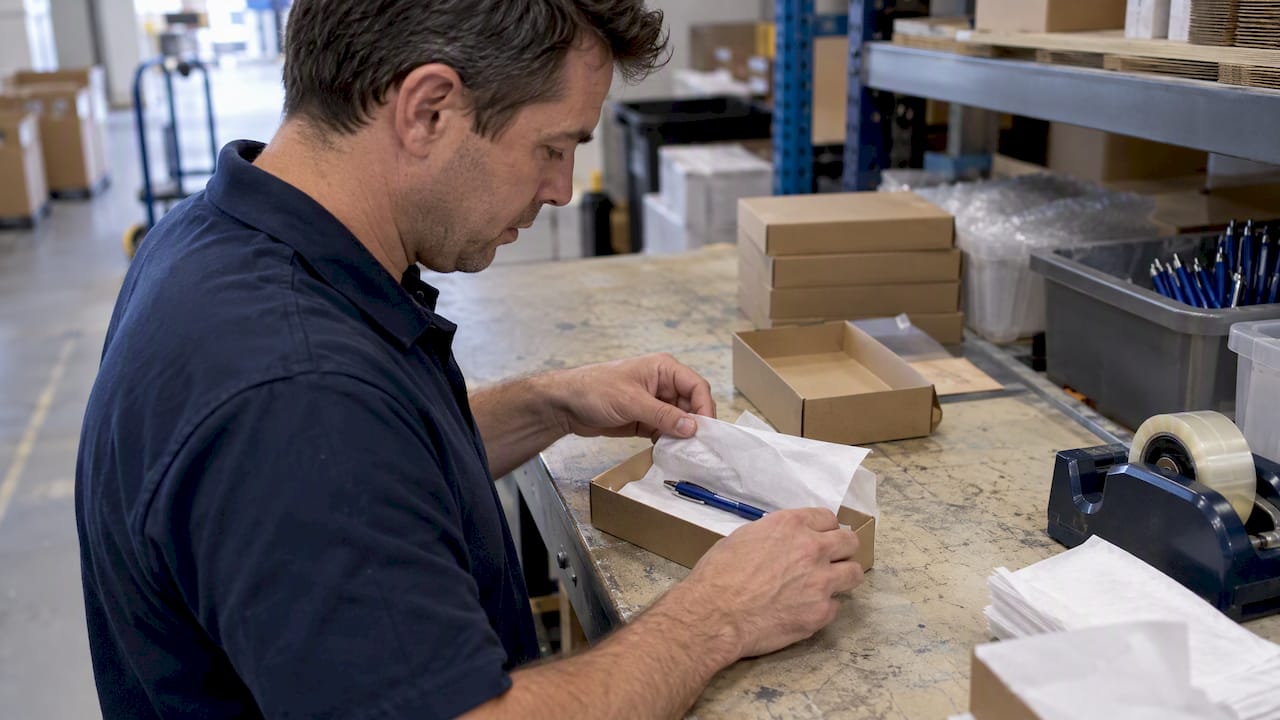
Presentation matters most for items given to a smaller, higher-value audience: clients, partners, new hires. For mass giveaways at volume, keep packaging simple and durable rather than elaborate.
When physical merch beats another round of digital ads
Physical items build repeated impressions in a way a scrolled-past ad never does. They’re worth the spend when you want a tactile link to your brand: events, onboarding, community sponsorships. Test a small run before committing to a bulk order.
— PromoShop
Get a quote and start your order
We offer free artwork design, a price beat guarantee and an express service for businesses that need stock fast, all built on more than 25 years of factory-direct sourcing.
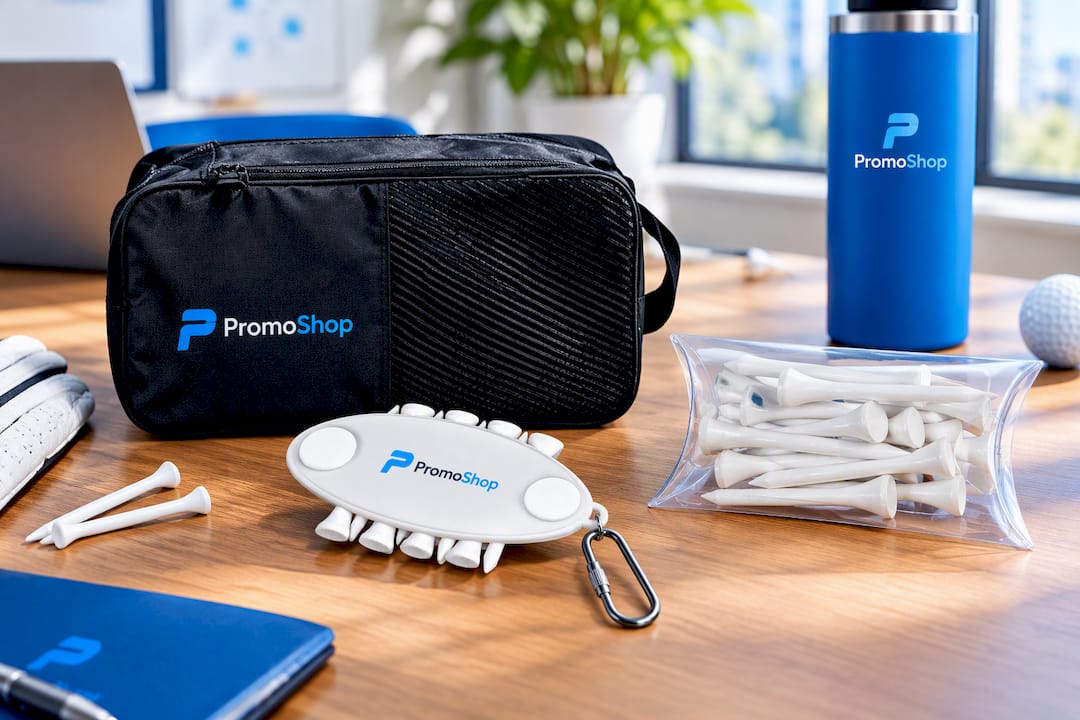
- Browse the Shoe Bag for retail bundling or the Oval Tee Caddy for branded apparel runs
- Send us your artwork, quantity and delivery date for a quote
- Ask about an express sample run before committing to a full order
Head to Promoshop to get started.
FAQ
What are the best promotional product ideas for small businesses?
Wearables, drinkware, tech accessories and eco essentials tend to perform best because they get daily use and carry your logo repeatedly. Pick the category based on your campaign goal, whether that’s an event, a retention play or an onboarding pack.
What’s a typical minimum order quantity for branded merchandise?
Minimum order quantities vary by product and decoration method, since setup costs like printing plates don’t scale down for smaller runs. Ask your supplier directly, and expect a meaningfully better per-unit price once you order well above the minimum.
Do I need to register for GST to sell or buy promotional products?
GST registration is generally required once your business turnover reaches $75,000 (or $150,000 for some non-profits), according to business.gov.au. GST itself is charged at 10% on top of the product cost.
Can I call a promotional item “eco-friendly” in my marketing?
Only if you can point to a specific, substantiated claim, such as a named certification or recycled material percentage, per ACCC guidance on green marketing. Vague claims without evidence risk being misleading under Australian Consumer Law.
If my giveaway collects emails, what consent do I need?
Under APP 7, anyone you plan to follow up with for marketing needs a clear way to opt out, such as an unsubscribe link or an SMS “STOP” option. Make the opt-in clear on your entry form and keep a record of consent.