

October 5, 2026
The main refill families are ballpoint, gel, rollerball and fountain, and each one writes, dries and fits differently. If you’re trying to match a refill right now, pull it out of the pen, measure its length, and check the tip size and the rear plug shape. Those two checks solve most compatibility questions before you even search for a replacement.
TL;DR:
- Most refill compatibility issues can be avoided by checking length, tip size, shoulder position, and rear plug shape before purchasing.
- Ballpoint refills are oil-based, dry quickly, and resist smudging, making them suitable for signatures and handling-heavy tasks.
- Gel refills blend smooth flow with fast drying, ideal for note-takers and left-handed writers, whereas rollerball refills offer the smoothest line but require careful drying time.
- Choosing the correct refill depends on your writing needs, with a focus on matching physical features and measurements to ensure proper fit and ink performance.
Table of Contents
- Major pen refill types and how they behave
- Refill sizes and measurements: lengths, tips and common notations
- Compatibility checklist: what to inspect before you buy a refill
- How to measure and identify an unknown refill in 5 quick steps
- Choosing a refill for your use case
- Maintenance, sustainability and why refillable pens can be better value
- PromoShop’s practical examples: refillability in action
- Why the refill matters more than the pen body
- How we can help with branded refillable pens and spares
- FAQ
- Sources
Major pen refill types and how they behave
Ballpoint refills use oil-based ink. It’s thick, dries quickly and resists smudging, which is why ballpoints turn up in offices, warehouses and anywhere forms get signed on the move. Rollerball refills use water-based ink instead. The flow is smoother and the line feels wetter on the page, but that same water base takes longer to dry and smudges more easily under a left hand or a quick page turn, according to the Reading Writing Hotline guide.
Gel refills sit between the two. They borrow the smooth glide of a rollerball while drying closer to ballpoint speed, a hybrid effect that comes down to the resins and solvents blended into the ink itself. Technical analysis of ink formulations shows ballpoint inks lean on more organic solvents and resin for rub resistance, while water-based inks need different polymer systems to dry fast and avoid feathering on porous paper, as detailed in resin research from the University of Technology Sydney.
Each family suits different jobs:
- Ballpoint: best for everyday writing, signatures and anything that needs to survive handling without smearing.
- Gel: suits people who want a smoother feel without sacrificing dry time, including note-takers and left-handers.
- Rollerball: gives the richest, smoothest line but needs a moment to dry and a steadier hand.
- Fountain: liquid ink fed by gravity or a cartridge, favoured for calligraphy and long-form writing but rarely used in disposable or promotional pens.
You’ll also come across proprietary refill names on packaging. D1 refers to a short, slim ballpoint format common in compact and multi-pens. Parker-style (sometimes labelled G2-compatible) is a mid-length ballpoint format shared across several brands. Cross-style refills are another common mid-length format with a distinct tip profile. Recognising these names helps you narrow down a search without needing to know every manufacturer’s internal part number.
Refill sizes and measurements: lengths, tips and common notations
Length is the first thing to check, and it’s also where most mismatches happen. Lay the refill flat against a ruler and measure tip to tail, including the spring if one is fitted. Refills are manufactured to a tolerance of around 1 to 2 millimetres, so a refill that’s a touch shorter or longer than your old one can still work, provided the tip and rear plug match.
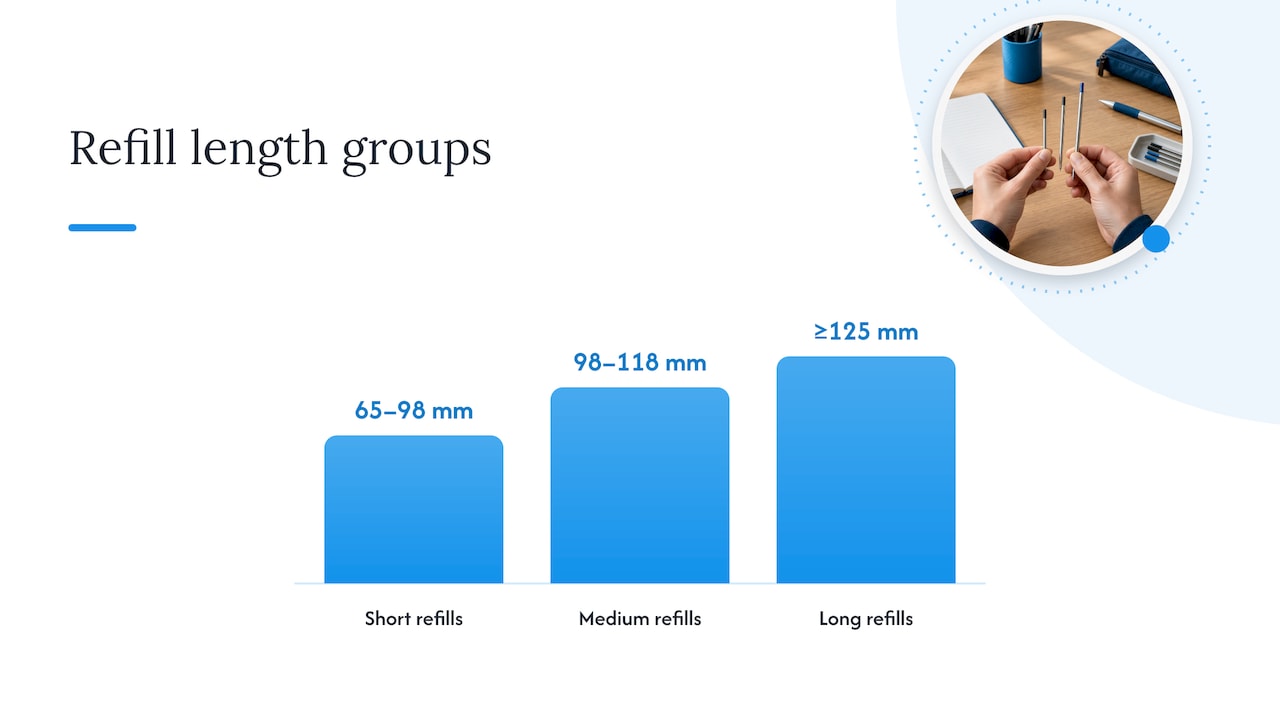
Refills tend to cluster into rough length groups:
- Short, around 65 to 98 millimetres: typical of D1-style refills used in slim and multi-function pens.
- Medium, around 98 to 118 millimetres: the range most Parker and G2-style ballpoint refills sit in.
- Long, 125 millimetres or more: common for rollerball refills, which need extra ink capacity for their wetter flow.
Tip size is the second number worth knowing. Ballpoint and gel refills are usually marked .3, .5, .7 or .9 millimetres, referring to the ball diameter and, roughly, the line width it lays down. Fountain pen nibs use a different notation altogether, typically EF (extra fine), F (fine), M (medium) or B (broad). A .5 millimetre ballpoint and a fine fountain nib both produce a fine line, but they are not interchangeable parts, and refill shopping pages often list both length and point size together so you can match on two criteria at once.
Compatibility checklist: what to inspect before you buy a refill
Length alone won’t guarantee a fit. Four physical features decide whether a candidate refill will actually sit and click properly inside your pen body.
- Shoulder position: the point where the refill narrows toward the tip. If it sits in a different spot to your original refill, the pen’s clicking mechanism may not seat correctly even if total length matches.
- Spring placement: many retractable pens use a small spring near the tip to manage ink flow and prevent leaks. Note whether your old refill has one, and where it sits, before ordering a replacement.
- Rear plug shape: the back end of the refill often has a specific plug or cap shape that engages the pen’s push mechanism. A mismatched plug is a common reason a refill that measures correctly still won’t click.
- Tip mount style: some tips are moulded as part of the refill body, others use a separate metal tip pressed in. This affects how smoothly ink reaches the ball and can signal a proprietary design even when the length looks standard.
A refill that matches on length but fails on any of these four points is usually a proprietary format in disguise, built for one brand’s mechanism only. When in doubt, check the pen manufacturer’s own support documentation, such as Parker’s refill guidance, which walks through insertion and troubleshooting for its specific cartridge and converter systems.
How to measure and identify an unknown refill in 5 quick steps
- Remove the refill carefully, following the pen’s twist or push mechanism, and photograph it next to a ruler for reference.
- Measure total length, then separately measure the distance from tip to shoulder using a ruler or callipers for more precision.
- Note the tip diameter (look for a stamped number such as .5 or .7) and sketch the rear plug shape, including whether a spring or spacer is fitted.
- Compare your measurements against supplier refill categories, which are often grouped by length and point size, or check the original pen’s documentation if available.
- Test the fit before committing to a bulk order, and once you’ve confirmed a match, keep a few spares with the pen so you’re not caught out mid-task.
Choosing a refill for your use case
The right refill depends on what you’re writing and how fast you need it to dry. Heavy note-takers and students generally do best with gel or fine ballpoint refills, since smooth flow reduces hand fatigue over long sessions, a point echoed in ANU’s stationery guidance for students, which recommends testing a few pen types before settling on a favourite.
- Signatures and form-filling: a .5 or .7 millimetre ballpoint gives a clean, fast-drying line that holds up to handling.
- Left-handers: quicker-drying ink matters more than line smoothness, so ballpoint or gel beats rollerball for most left-handed writers.
- Sketching or archival writing: finer rollerball or fountain tips suit detail work, though drying time needs more care.
- Promotional giveaways: a refillable pen signals better perceived quality than a disposable one, and keeping spare refills on hand avoids a branded pen being binned the moment it runs dry.
Maintenance, sustainability and why refillable pens can be better value
A refillable pen needs very little upkeep. Store it with the tip capped or retracted, keep it away from heat that can thin the ink, and give the tip a light wipe if it picks up lint or dust from a pocket or bag.
The bigger value comes from what refillability avoids: a fresh plastic barrel every time the ink runs out. For organisations ordering branded pens in volume, a refillable design means one well-made barrel can outlast dozens of ink cartridges, cutting both waste and ongoing supply cost.
- Wipe the tip occasionally and store the pen capped to stop ink drying out at the nib.
- Avoid leaving refillable pens in direct heat, which can thin ink and cause leaks.
- Keep spare refills matched to the exact pen model, not just a close-looking substitute.
Pro Tip: Order labelled spare refill packs alongside any branded pen shipment, so event staff can swap a dry pen in seconds instead of writing it off.
PromoShop’s practical examples: refillability in action
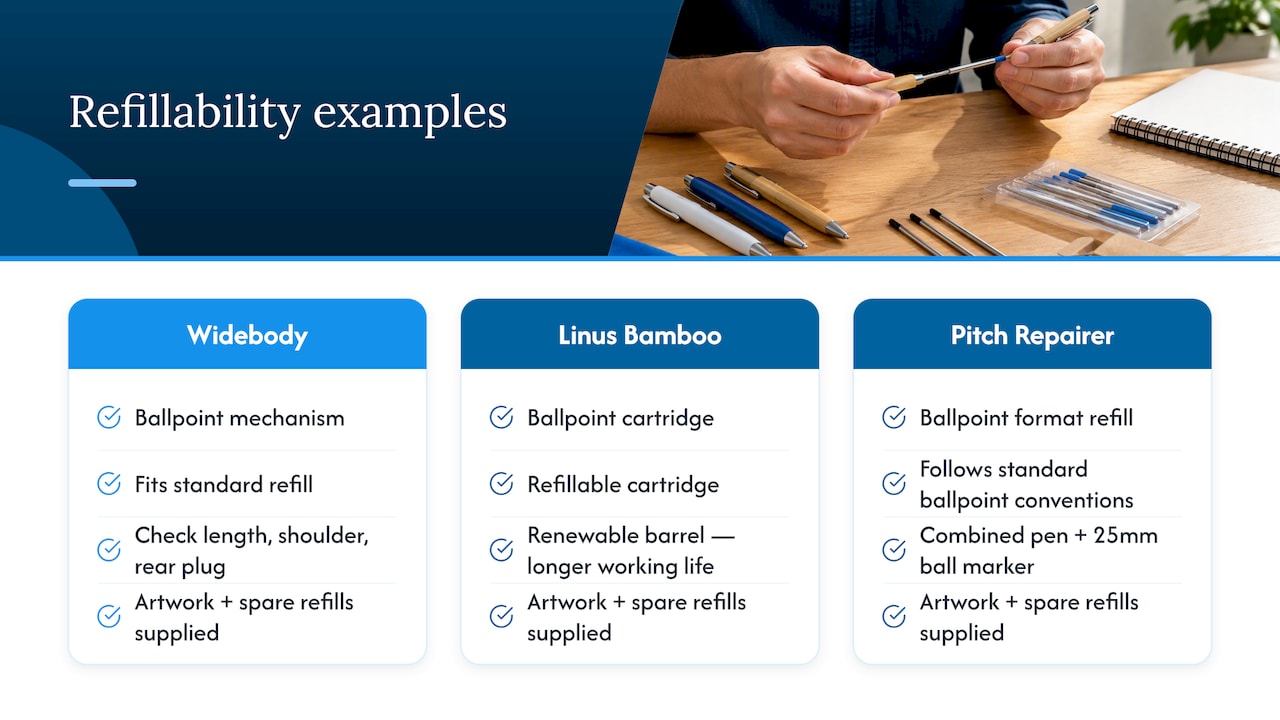
The Widebody Ice Clear Pen uses a standard ballpoint mechanism, so the checklist above (length, shoulder, rear plug) applies directly when sourcing a replacement refill. The Linus Bamboo Pen Set pairs a renewable barrel with a refillable ballpoint cartridge, giving branded campaigns a longer working life than single-use pens. The Premium Pitch Repairer With 25mm Ball Marker combines a pen function with a practical tool, and its refill follows the same ballpoint format conventions. Across all three, our free artwork service and spare-refill supply mean a branded order arrives ready for the field, not just for the photo.
Why the refill matters more than the pen body
After years of sourcing promotional pens, we’ve noticed the refill decides how a brand is remembered far more than the barrel design does. A pen that skips or dries out mid-signature leaves a worse impression than a plain one that writes cleanly every time. We lean toward refillable formats for branded campaigns precisely because a spare refill costs little next to the cost of a recipient’s bad first write.
— PromoShop
How we can help with branded refillable pens and spares
We supply refillable pens built around the ballpoint and gel formats covered above, and offer custom branding, free artwork design and express service. 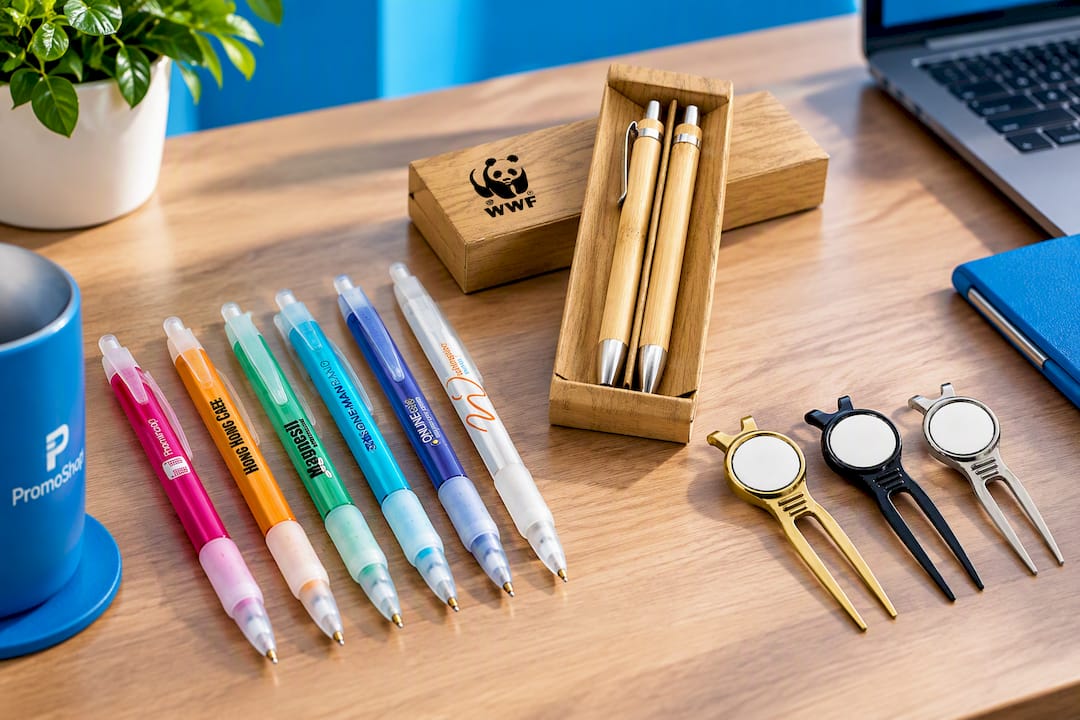
For sustainability-focused campaigns, our eco-friendly promotional products collection and our top eco-friendly picks for 2026 both lean on refillable and renewable-material pens, and our printing options page covers the branding choices available once you’ve picked a pen. For a wider look at sustainable office branding generally, Niche Projects’ guide to environmentally friendly branding is a useful companion read.
| What you need | Where to start |
|---|---|
| Refillable branded pens | Widebody Ice Clear Pen |
| Renewable-material pen set | Linus Bamboo Pen Set |
| Dual-purpose event giveaway | Premium Pitch Repairer With 25mm Ball Marker |
| Branding, artwork and express turnaround | Custom Branding, Free Artwork, Express Service and more |
If you’re planning an event or a branded giveaway, get in touch and we’ll help you order the right pen with spare refills included.
FAQ
What are the main types of pens?
The main pen types are ballpoint, gel, rollerball and fountain, each using a different ink system. Ballpoint uses oil-based ink for quick drying, rollerball and fountain use water-based ink for a smoother but wetter line, and gel blends the two, according to handwriting guidance from the Reading Writing Hotline.
Why have fountain pens become less common for everyday use?
Fountain pens need liquid ink, careful handling and occasional cleaning, which makes them less practical for fast, disposable or promotional writing tasks than ballpoint or gel pens. Ballpoint and gel refills dry faster and resist smudging better, which suits most everyday and office writing, as explained in ink chemistry research from UTS.
What is a D1 pen refill?
A D1 refill is a short, slim ballpoint refill format commonly used in compact and multi-function pens. It typically measures in the shorter length range covered earlier in this guide, and recognising the name helps you search refill listings correctly.
What is a pen refill called?
A pen refill is simply called a “refill” or sometimes a “cartridge,” depending on whether it holds ink directly (refill) or is a sealed ink reservoir (cartridge, more common in fountain pens). Both terms describe the replaceable ink component inside a pen body.
How do I know if a refill meets a quality standard?
Ballpoint refills intended for general use can be checked against ISO 12757-1:2017, which sets minimum quality requirements for ballpoint pens and refills. This standard is a useful reference when buying higher volumes of refills for an office or event.
Sources
- Better handwriting for adults
- ISO 12757-1:2017 — Ball point pens and refills — Part 1: General use
- The top stationery essentials you need for uni | ANU
- Resin characterisation and integrated modelling applied to ink dating (UTS thesis)