

September 21, 2026
Choose event cardstock for cheap single-day badges, PVC or acrylic for reusable IDs, and metal or engraved badges when you need a premium, permanent staff look. Wood and eco board suit brands chasing a sustainability angle. Match the fastener and print method to how long the badge needs to last, and the cost follows from there.
TL;DR:
- Cardstock and adhesive badges are ideal for quick, one-time use at single-day events due to their low cost and fast production.
- Metal and engraved badges provide a durable, long-lasting option suitable for staff members who wear them daily over several years.
- Pin backs are secure but can damage delicate fabrics, while magnetic fasteners are more comfortable but unsuitable near certain medical devices or industrial equipment.
- UV printing is best for full-color logos with multiple hues, while laser engraving offers a permanent finish for metal or wood badges.
- Lead times are typically a few days with options for rush orders, but verifying file quality and requesting proofs prevent costly mistakes.
Table of Contents
- Name badge types by material: what actually holds up
- What’s the best fastener for your badge?
- UV print, dye-sub or engraving: which printing method wins?
- Event badge or staff badge: how do you decide?
- How long does it take to order name badges?
- The publisher’s perspective on badge suppliers
- Ready to order? Here’s how Promoshop makes it simple
- Sources
- FAQ
Name badge types by material: what actually holds up
Material drives everything: cost per unit, how long the badge survives, and what it says about your brand the second someone reads it. Get this wrong and you either overspend on a badge that gets binned after one conference, or hand a client-facing staff member something that looks cheap.
- Synthetic cardstock and coated card are the cheapest option and print fast, which makes them the default for single-day events, expos and registration desks where badges get thrown out afterwards.
- Plastic (PVC) badges cost more per piece but survive being clipped, dropped and worn for multiple days, making them the practical middle ground for conferences and outdoor events.
- Acrylic badges give you a glass-like clarity that photographs and prints look genuinely premium on, though the material chips and cracks more easily than PVC if it’s dropped on concrete.
- Metal, usually aluminium or stainless steel, is the material of choice when permanence matters, since engraved text doesn’t fade or peel and the badge can survive years of daily wear on a uniform.
- Wood and eco board options trade some durability for a warm, natural look that suits cafés, wineries and brands leaning into sustainability messaging.
The main caveat with wood and cardstock is moisture. Outdoor events, hospitality roles near steam or spills, and anyone working near water need plastic, acrylic or metal instead. As a rough guide, cardstock sits at the bottom of the price scale, PVC and acrylic in the middle, and engraved metal at the top, with wood usually landing between plastic and metal depending on finish.
What’s the best fastener for your badge?
The attachment method decides how the badge gets worn and how much wear it can take, and picking the wrong one causes more complaints than the badge design itself.
- Pin backs hold securely and suit heavier badges, but the pin can snag or put a small hole in delicate fabric, so they’re a poor fit for silk blouses or fine knitwear.
- Magnetic fasteners avoid fabric damage entirely and feel more comfortable for all-day wear, though magnets aren’t suitable around certain medical devices or heavy industrial machinery, so check the environment first.
- Clips, including military clips, attach and remove in seconds, which makes them a favourite for uniforms in retail and hospitality where staff swap shifts constantly.
- Lanyards and holders dominate multi-day conferences because they’re hands-free, hold larger cards with QR codes, and let attendees glance down without touching anything.
- Adhesive or peel-and-stick badges are strictly single-use, ideal for visitors, tours and one-off events where nobody needs the badge back.
UV print, dye-sub or engraving: which printing method wins?
The print method decides how vivid the colour looks, how long it lasts, and what you pay per badge.
- UV printing lays down vivid, full-colour branding across almost any substrate, from acrylic to metal to card, and it’s the go-to for logos with several colours.
- Dye-sublimation produces edge-to-edge, photo-quality prints that resist fading on coated surfaces, which is why it’s common for badges with photographs or gradient branding.
- Laser engraving etches text permanently into metal or wood, giving a long-lasting, low-maintenance finish that won’t scratch off after a year of daily handling.
- Digital print and label-insert systems let you change a name on-site in seconds, which matters for organisations with staff turnover or events needing rapid reprints.
Variable-data printing and QR codes now sit inside most of these workflows rather than as an afterthought. Event badges routinely carry QR codes and colour-coding for attendee types printed straight into the same file as the name and logo, and reusable systems achieve something similar with pre-printed logo plates paired with on-site name inserts, cutting the cost of every future name change.
Pro Tip: Keep the name in a larger font than the logo. Attendees read badges from arm’s length across a room, not up close, and a name that’s too small defeats the whole point of wearing one.
Event badge or staff badge: how do you decide?
Duration and brand exposure decide the badge, not personal preference.
- Single-day events need low cost, fast turnaround and light materials: cardstock or adhesive badges printed the week of the event, sized for quick registration.
- Multi-day conferences need durability plus data: PVC or plastic with lanyards, variable-data name printing, and often a printed QR code for check-in and lead capture.
- Staff badges need brand coherence over years, not days: engraved metal or full-surface printed plastic that matches uniform colours and survives daily wear.
- Security and access needs vary by venue: some events require a photo ID visible on the badge, others just a scannable code tied to a database, so confirm this with the venue before finalising the design.
Complete, professionally printed badges on metal, wood or plastic give a premium, ready-to-wear finish without paper inserts, which is why customer-facing staff roles usually skip the insert systems altogether.
How long does it take to order name badges?
Professional badge suppliers typically quote lead times of a few working days, with express or rush options available for tighter deadlines. Files should stay in vector or high-resolution formats, with name text large enough to read at arm’s length and clear of the hole punch area where a lanyard or clip attaches.
For bulk orders, CSV imports and dedicated badge software beat a basic mail-merge, which tends to break line spacing on long names and misalign hole punches across a batch. Watch for special characters and long surnames when building your CSV, and always request a proof before the full run prints.
- Material, fastener type, printing method, quantity and rush fees all move the final price up or down.
- DIY printing works for small, informal runs, but check adhesive strength and hole alignment before committing to a big batch.
- Uploading a clean CSV early avoids reprint costs later.
Pro Tip: Always request a physical proof, not just a PDF on screen, before approving a run over 50 units. Colour and hole placement can shift slightly once printed on the actual substrate.
The publisher’s perspective on badge suppliers
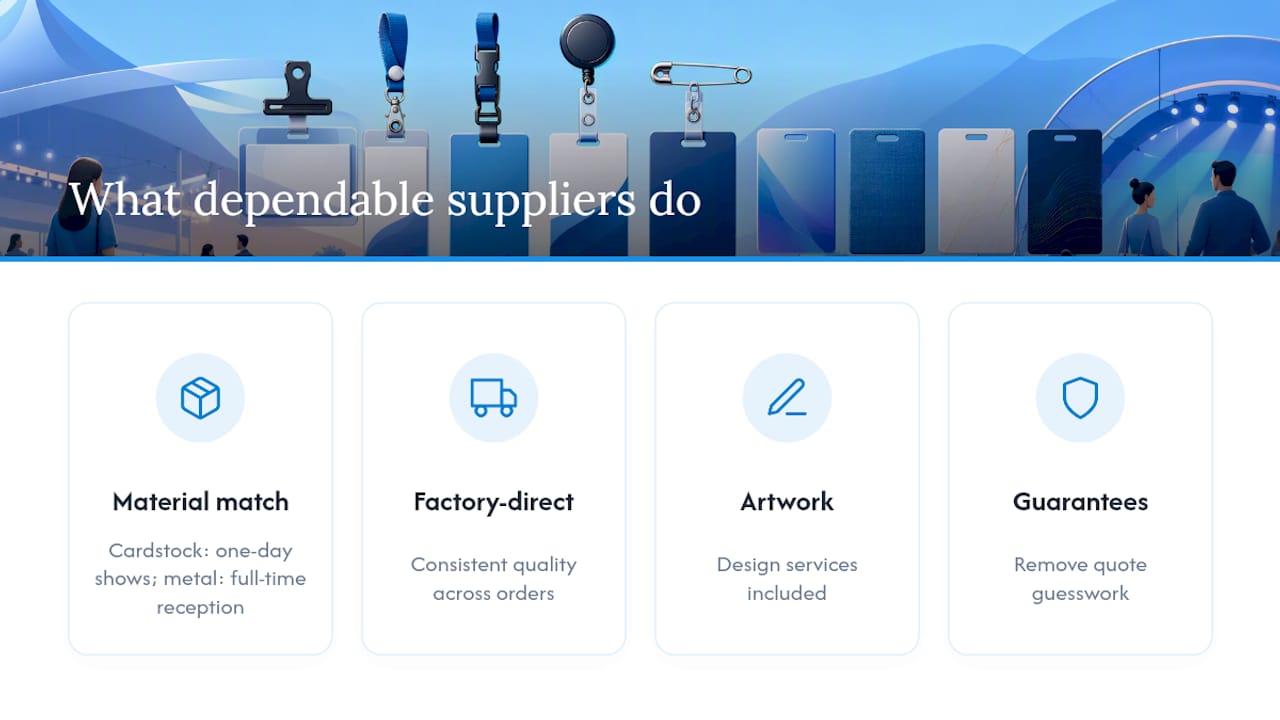
We’ve spent over 25 years supplying branded merchandise across Australia, and the badges that hold up best in the field are rarely the ones that looked flashiest on a proof sheet. They’re the ones matched properly to the job: cardstock for a one-day trade show, engraved metal for a receptionist who wears it five days a week for three years.
What sets a dependable supplier apart isn’t the catalogue size. It’s factory-direct sourcing that keeps quality consistent order after order, offering artwork design services, and guarantees designed to remove the guesswork from comparing quotes. Get the fundamentals right and the badge does its job quietly, which is exactly what a good one should do.
— SEO
Ready to order? Here’s how Promoshop makes it simple
A key advantage from some suppliers is factory-direct sourcing that keeps badge quality consistent, offering artwork design services to ensure proper logo placement, and guarantees aimed at easing the stress of comparing printing quotes.
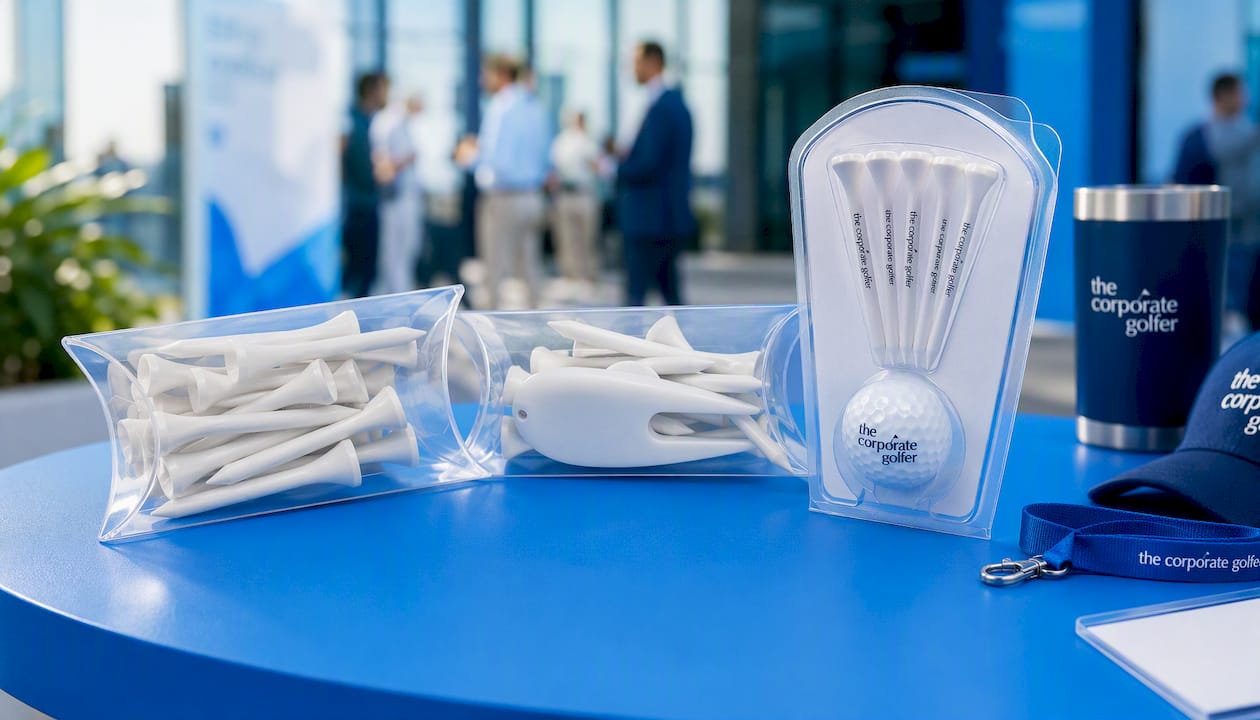
Beyond badges, our catalogue covers the merchandise most event and staff kits actually need, from promotional clothing to drinkware and corporate gifts. If you’re kitting out a conference or a new team, product packs like the Pillow Pack – 55mm Tees, the Pillow Pack – Standard Tee Pack and the 1 Ball 5 Tee Shell Pack show how bundled apparel orders work alongside your badge run.
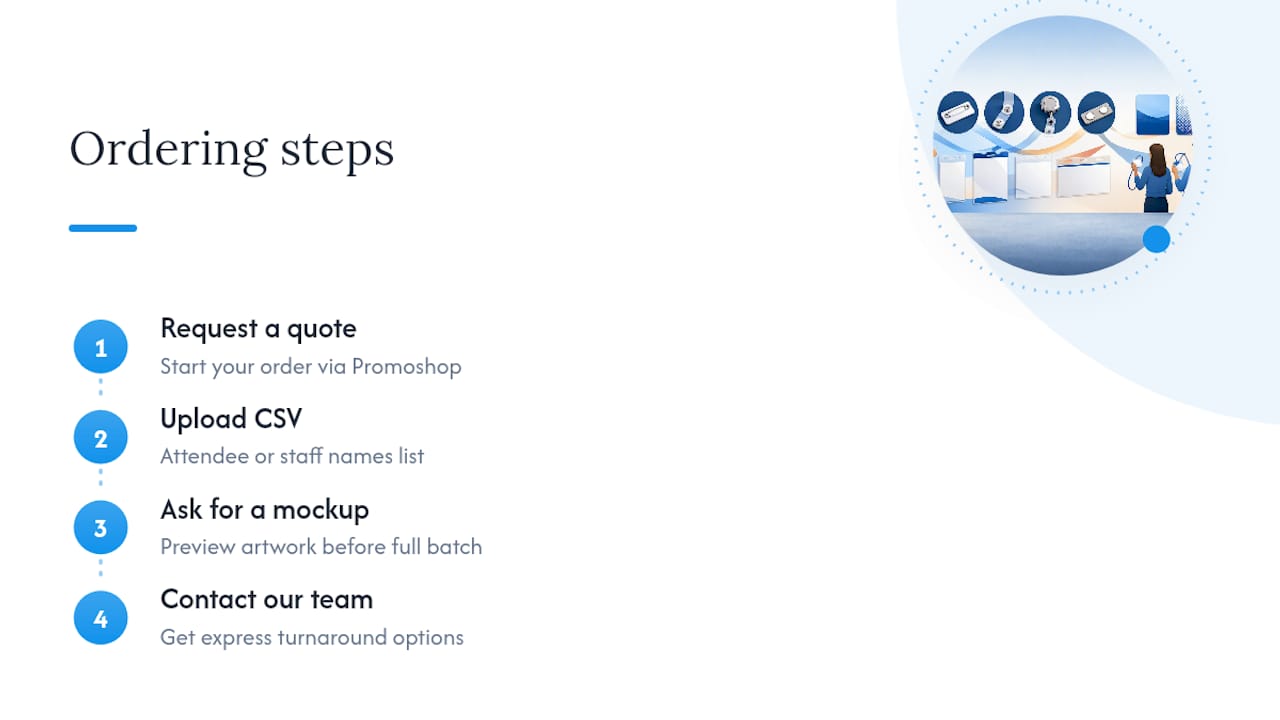
Request a quote, upload your CSV of attendee or staff names, or ask for a mockup before you commit to a full batch. Get in touch through Promoshop and our team will walk you through express turnaround options if your event is closer than you’d like.
Sources
The BitQuest guide to event badge printing informs lead-time and CSV workflow guidance here. The Namebadges supports the label-insert system details, and badgepoint’s name badge range backs the premium material claims.
FAQ
What are the different types of name badges available?
The main categories are cardstock or adhesive badges for one-off events, PVC and acrylic for reusable IDs, and metal, wood or engraved badges for permanent staff use. Fastener choice (pin, magnet, clip or lanyard) and print method (UV, dye-sublimation or engraving) further split each category by durability and finish.
What are the different types of badge holders?
Common holder types include rigid plastic sleeves worn on a lanyard, retractable reel holders that pull out on a cord, and clip-on holders that attach directly to clothing without a lanyard. A retractable holder suits staff who need to scan or present their badge repeatedly through the day, such as retail or venue access roles.
Can I print name badges from Officeworks?
Officeworks and similar retail print shops can produce basic paper or cardstock badges, but they generally don’t offer engraving, dye-sublimation, or variable-data batch printing for large events. For durable staff badges or bulk conference runs with QR codes and CSV-based name imports, a dedicated supplier handles the file setup and safe zones more reliably.
How do I choose between a disposable and a reusable badge system?
Choose disposable cardstock or adhesive badges for single events where the badge won’t be needed again. Choose a reusable system, such as a pre-printed logo plate with swappable name inserts, for organisations with frequent staff turnover or recurring events that need fast name changes without reprinting the whole badge.