
September 19, 2026
For a four-person outdoor table, choose a 2.1–2.7m (7–9ft) canopy; for a six to eight-seater, go up to 3–3.3m (10–11ft). Daily commuters do best with a 21–25in folding umbrella, while two people sheltering together need a straight umbrella closer to 30in or a golf-style canopy at 54in-plus. Always check rib length rather than guessing from the folded size, and add a heavier base as canopy size grows. Umbrellas are available across this full range for branded and personal use.
TL;DR:
- Most patio umbrellas worth considering range from 6ft to 11ft, with larger sizes required for shielding six or more people around a table.
- When choosing umbrellas for windy areas, focus on fibreglass ribs and vented or double-layer canopies for durability instead of size alone.
- Personal umbrellas are best selected based on rib length, with 23–25in ribs offering a good compromise between coverage and portability.
- For promotional use, specify rib length or canopy diameter in advance to ensure branding and size fit the event or brand visibility needs.
- Base weight requirements scale with canopy size, with 18–25kg sufficient for small umbrellas, and 40kg or more for large patio or cantilever models in open or windy environments.
Table of Contents
- Patio and cantilever umbrella sizes: matching canopy to table and zone
- Walking and folding umbrella sizes: rib length, coverage and portability
- How to measure umbrella size correctly
- Windproof vs regular umbrellas: when build matters more than size
- Choosing umbrella sizes for promotional and branded orders
- Why size decisions belong with the supplier, not the checkout page
- Get your branded umbrella sizing right before you order
- Sources
- FAQ
Patio and cantilever umbrella sizes: matching canopy to table and zone
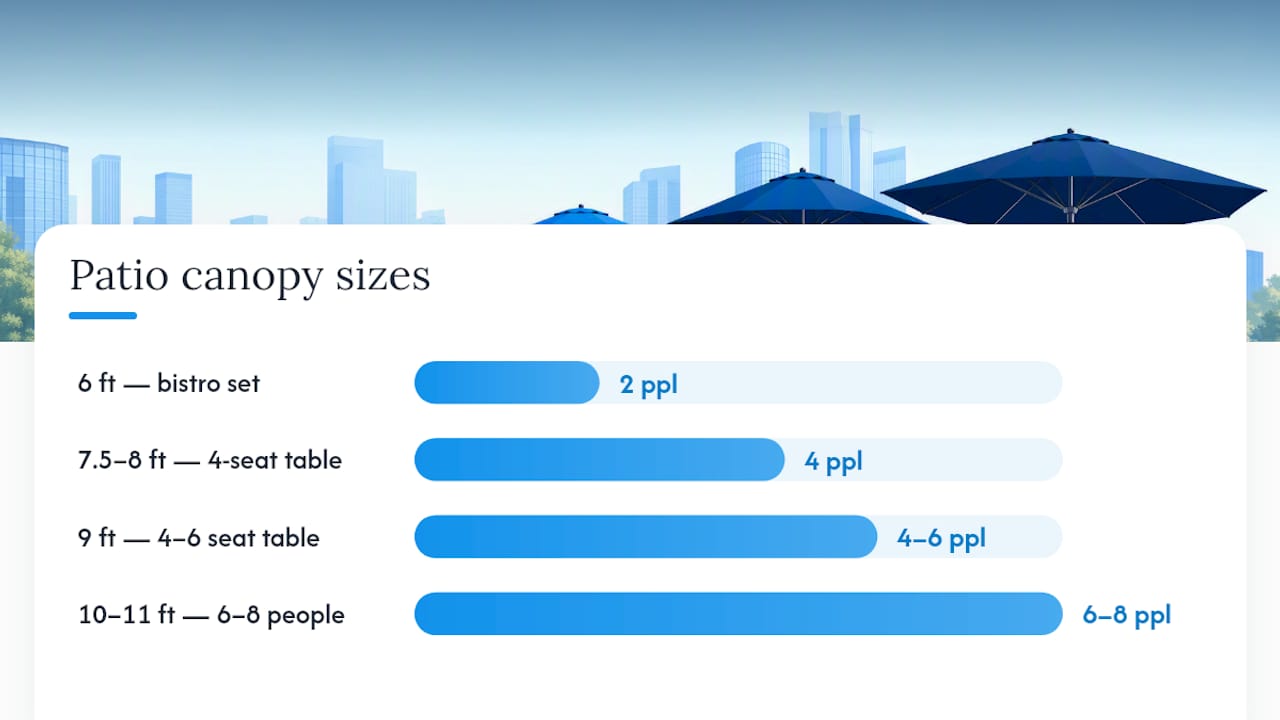
Patio umbrellas run from around 6ft up to 11ft, and the jump between sizes matters more than it looks on a spec sheet. A 6ft umbrella suits a small bistro set for two. Step up to 7.5–8ft and you’ve got shade for a standard four-seater. A 9ft canopy is the workhorse size for most backyard dining tables seating four to six, and once you’re hosting six to eight people around a long table, 10–11ft canopies (or twin umbrella setups) are the only options that actually cover everyone.
Cantilever umbrellas solve a different problem: they position the pole outside the seating area, so nothing blocks legroom or interferes with a table’s centre hole. They’re the better pick for lounge zones, daybeds, or any layout where a centre pole would be a nuisance. Centre-pole umbrellas remain cheaper and more stable for straightforward dining tables. Check the cantilever’s arm clearance and rotation range before buying. Some offset models only tilt 180 degrees, which limits how much shade you can chase through the day.
Base weight needs to scale with canopy size, and a table’s centre hole alone often isn’t enough to keep a large umbrella upright in wind, according to BBQGuys’ patio umbrella size guide. As a rough guide:
- 6–7.5ft umbrellas: a base around 18–25kg is typically sufficient in sheltered spots.
- 9ft umbrellas: look for 30–40kg, more if the area gets regular gusts.
- 10ft-plus or cantilever models: 40kg or heavier, often with stackable baseplates.
Pro Tip: If your patio catches wind off open ground or water, close the umbrella when you’re not outside. Even a well-anchored 9ft canopy can lift a lightweight base once wind gets under the fabric.
Walking and folding umbrella sizes: rib length, coverage and portability
Umbrella sizing for personal use comes down to rib length, not the folded dimension printed on the box. Manufacturers commonly list folding umbrella rib lengths at 19, 21, 23, 25 and 27 inches, with straight and golf umbrellas stepping up to 30in and beyond. Rib length roughly doubles to give you the canopy’s arc, so a 23in rib produces a canopy wide enough to keep one adult mostly dry in moderate rain.
- 19–21in ribs: pocket-sized, best for a bag or glovebox, minimal wind resistance.
- 23–25in ribs: the everyday commuter sweet spot, balancing coverage and portability.
- 27in-plus folding or 30in straight: better for sharing with a child or partner, or for taller users who need extra drop length.
If you’re regularly walking with someone else, a compact folding umbrella won’t cut it. Straight umbrellas with 30in-plus ribs, or golf umbrellas at 54in and above, are built for two-person coverage. Taller users should also check shaft length. A short handle on a compact umbrella forces you to hunch or hold it at an angle, which defeats the purpose of the extra canopy.
How to measure umbrella size correctly
Three terms come up constantly, and mixing them up leads to the wrong order. Rib length is the measurement from the centre pole to the tip of one rib. Arc is the total distance from tip to tip across the open canopy through the centre. Canopy diameter is often used interchangeably with arc, though on asymmetric or cantilever designs it can differ slightly.
- Measure rib length by extending a tape from the umbrella’s centre hub to the outer tip, then multiply by two for an estimate of arc.
- Measure your seating or standing footprint first: for a table, measure the tabletop’s width and add at least 2ft of overhang on each side for shade coverage as people move their chairs.
- Convert between units carefully. A “9ft” umbrella is roughly 2.7m, and rib-length figures given in inches need converting to centimetres if you’re comparing against metric outdoor furniture.
The most common mistake is measuring the folded umbrella length and assuming it predicts canopy coverage. It doesn’t. Manufacturers size by rib length or arc for a reason: it’s the only spec that removes ambiguity when you’re ordering, especially for custom or bulk runs.
Windproof vs regular umbrellas: when build matters more than size
A windproof umbrella isn’t defined by how big it is. It’s defined by how it’s built. Regular umbrellas typically use rigid ribs and a single-layer canopy, both of which flex poorly under gusts and are prone to inverting. Windproof designs generally use flexible fibreglass ribs that bend and spring back, plus vented or double-layer canopies that let wind pass through instead of ballooning the fabric, a construction difference detailed in Fox Umbrellas’ sizing and design guide.
- Fibreglass ribs: flex under pressure rather than snapping or bending permanently.
- Vented canopies: release wind pressure through a gap near the top instead of catching it like a sail.
- Double-layer canopies: add strength without much extra weight, common on quality golf umbrellas.
Windproof claims aren’t standardised, and performance in a lab test doesn’t always match a sustained coastal gust. Treat “windproof” as a durability feature, not a guarantee against every condition.
Pro Tip: If you’re buying for a coastal office, a golf course, or regular commuting through open, windy streets, prioritise fibreglass ribs and vented canopies over a bigger canopy. A smaller windproof umbrella will usually outlast a larger regular one.

Choosing umbrella sizes for promotional and branded orders
Size decisions for branded umbrellas hinge on how the umbrella will be used and how much logo space you need. Compact folding umbrellas (19–21in ribs) work well as low-cost giveaways where the goal is volume, not visibility. Straight and golf umbrellas, with their larger single-panel canopy, give logos far more room to read clearly at a distance. Large patio umbrellas suit trade shows, market stalls or branded seating areas where the shade itself is part of the promotion activation.
Printing method should follow canopy size and artwork complexity, not the other way round. Silkscreen printing keeps costs down for simple one or two-colour logos on higher-volume orders, while dye-sublimation suits full-canopy, multi-colour or photographic designs without the stiff feel of a vinyl transfer. Read more in Promoshop’s printing options guide before finalising artwork.
Before placing a bulk order:
- Confirm rib length or arc in writing, not just “small/medium/large” labels.
- Send print-ready artwork sized to the actual canopy panel dimensions.
- Ask about lead times for your quantity, especially around peak event seasons.
- Request a physical sample if this is your first order with a new canopy size or print method.
Check Promoshop’s branding guide for help matching umbrella size to your event goals before you brief a supplier.
Why size decisions belong with the supplier, not the checkout page
Most sizing mistakes happen because a buyer orders off a folded-length number instead of rib length or arc, then discovers the canopy is smaller (or the branding area is tighter) than expected. Experience shows a five-minute conversation about rib length and imprint area saves a reprint later.
That’s where a specialist earns its keep, particularly for full-canopy printing, large event runs, or bulk promotional orders where a sizing error multiplies across hundreds of units. Some suppliers back quotes with free artwork design and a price beat guarantee, helping ensure specs are correct upfront. When you request a quote, include the rib length or arc, your artwork file, and the quantity you need.
— SEO
Get your branded umbrella sizing right before you order
A practical alternative to guessing your way through a generic umbrella catalogue is to avoid picking vague “large” or “small” labels and instead obtain factory-direct sourcing, artwork design support, and pricing guarantees based on exact rib length and canopy size needed for your event or brand.
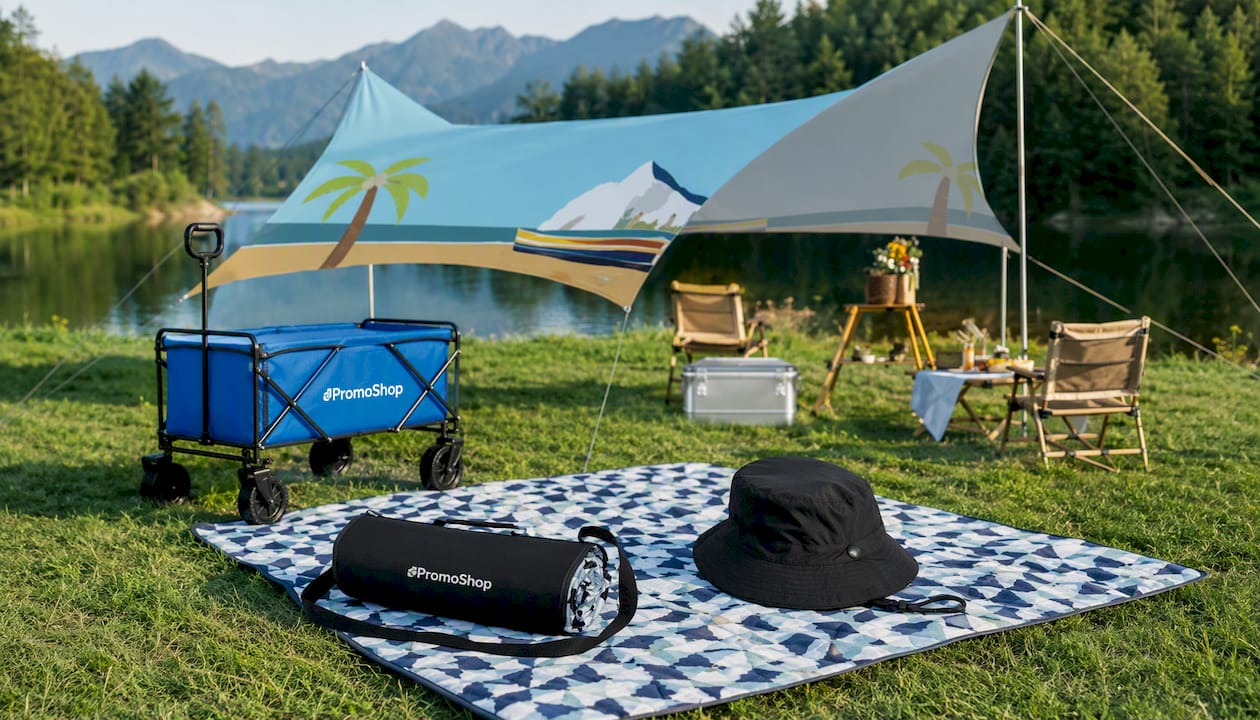
If a patio umbrella isn’t the right fit for your event, Promoshop’s Camping Canopy offers broader shade coverage for markets, festivals or trade booths. Pair either with the Umbria Picnic Rug – Extra Large for a complete outdoor branding setup, or bundle in a Packable Bucket Hat for compact giveaway packs alongside a folding umbrella. To speed up your quote, have your rib length or canopy diameter, imprint specifications, and order quantity ready. For first-time bulk orders, ask for a sample before committing to a full print run. Head to Promoshop’s product range to start your quote today.
Sources
For technical sizing and design references, see Fox Umbrellas’ stick and walking umbrella guide and BBQGuys’ patio umbrella size breakdown.
- Professional Guide to Umbrella Sizes: How to Measure and Choose for Custom Manufacturing
- Windproof golf umbrella vs regular: A complete guide - Umbrella Bazaar
- Patio umbrella size guide - BBQGuys
- Stick/Solid umbrella and walking stick sizing guide - Fox Umbrellas
FAQ
How do I know what size umbrella to get?
Match the umbrella to its use rather than picking by eye: a 21–25in folding umbrella suits solo commuting, a 30in-plus straight or golf umbrella suits two people, and a 7.5–9ft canopy suits a standard patio table for four to six. Always check rib length or arc, since these give the precise coverage figure manufacturers use for sizing.
What is the standard size of an umbrella?
There’s no single standard, but common folding umbrella rib lengths sit at 19, 21, 23, 25 and 27 inches, while patio umbrellas are typically sold in 6ft to 11ft canopy sizes. The right “standard” depends entirely on whether you’re shopping for personal, walking, or outdoor seating use.
Is a 42 inch umbrella big?
A 42in umbrella sits at the upper end of compact and everyday sizes, generally enough to cover one adult comfortably with some drip protection. It’s not large enough for two people or for multi-person coverage, which typically needs 54in or more.
Is a 54 inch umbrella big?
Yes. A 54in umbrella falls into golf umbrella territory and provides genuine two-person coverage, making it one of the larger options for personal or shared use outside of patio umbrellas. Golf and large straight umbrellas commonly range from 54 to 68 inches in canopy diameter.