

October 1, 2026
Choose a durable, correctly insulated cooler bag with a clear, high-visibility print area, and check that any sustainability claim is backed by real documentation. PromoShop stocks models built for this, including the Premium Neoprene Stubby Cooler and the Alaska Cooler Seat, with free artwork design included on orders. Three things matter most: insulation performance, everyday usefulness, and honest environmental claims.
TL;DR:
- Insulation types vary, with neoprene ideal for small coolers and foam with foil barriers better for larger, longer-cold-hold bags.
- A high-quality cooler bag with ice bricks maintains food at or below 5°C for two to four hours, depending on filling and use frequency.
- Heat transfer printing is best for neoprene, while screen printing suits polyester panels for sharper, more durable logos.
- Genuine eco claims require specific recycled content details and supporting documentation to avoid misleading marketing.
- Minimum order quantities depend on bag complexity, but bulk volume reduces unit costs, and sampling before full production is strongly advised.
Table of Contents
- Which cooler bag type suits your campaign?
- What materials and insulation actually keep drinks cold?
- Getting your logo to survive daily use
- How ordering, pricing and lead times work
- Keeping food safe and the bag performing
- A perspective on procurement risk
- Ordering your branded cooler bags
- Sources
- FAQ
Which cooler bag type suits your campaign?
The right cooler bag depends on how long you need it to keep things cold and how often the recipient will actually use it. A stubby cooler is cheap and fast to hand out, but it only holds one can. A lunch bag gets opened five days a week. An esky-seat hybrid gets pulled out for weekends away, which means the branding gets seen by everyone at the barbecue, not just the recipient, making it a great fit for gym promotion ideas that work where branded cooler bags increase retention and engagement.
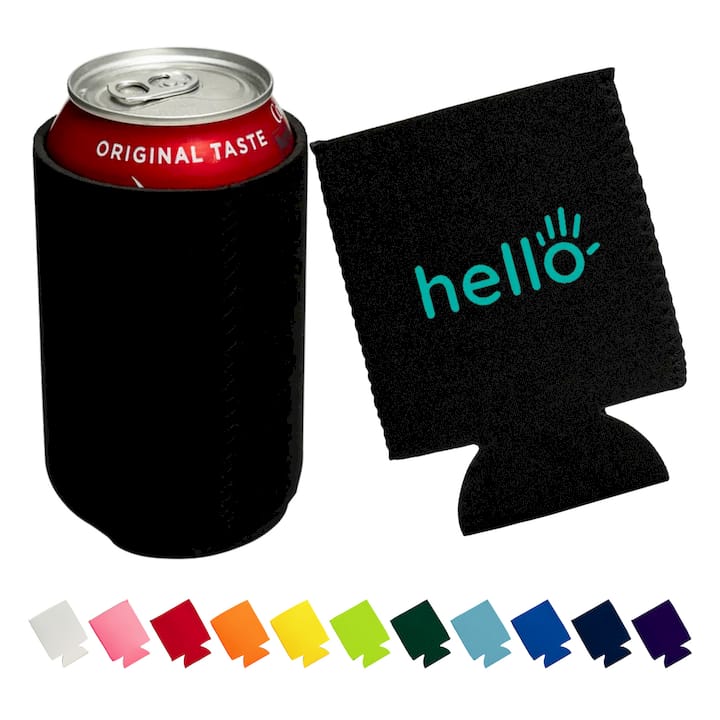
- Stubby or can coolers: low unit cost, ideal for street promotions and retail giveaways, with a front panel sized for a bold, single logo.
- Lunch cooler bags: suit staff and customer gifting, so look for a proper strap, an internal pocket, and a size that fits a real lunch, not just a sandwich.
- Picnic totes and esky-seat hybrids: better suited to premium client gifts or event packs, given their larger capacity and sturdier build.
Matching PromoShop’s range to these jobs is straightforward. The Premium Neoprene Stubby Cooler suits event giveaways and street promotions where volume matters more than size. The Alaska Cooler Seat works as a premium event gift, doubling as seating at outdoor events, which extends its time in front of your audience. The Shoe Bag is a versatile add-on for kit bundles or merch packs, useful when a cooler alone doesn’t fill out the offer.
What materials and insulation actually keep drinks cold?
Insulation type determines whether a cooler bag does its job or just looks like it does. Neoprene, the material in wetsuits, gives good flexible insulation and a soft, premium feel, which is why it works well for stubby coolers. PE foam panels, often paired with a foil barrier, are common in larger bags and hold cold longer than foam alone. The inner liner, usually PEVA, adds a wipeable, waterproof layer that keeps condensation off your gear.
Realistic expectations matter here. A well-insulated bag with an ice brick can hold food at or below 5°C for two to four hours, which is the benchmark to test against rather than an all-day claim no bag can honestly meet.
One in two business buyers now treats sustainability as a genuine purchase factor: 55.8% rate it important or extremely important when choosing promotional products, so a vague “eco” label without detail behind it is a missed opportunity as much as a risk.
- Ask suppliers for the exact recycled percentage and which component it applies to, not a blanket “eco-friendly” tag.
- Request supplier documentation or audit reports before quoting the claim in your own marketing.
- Keep green visual cues (leaf icons, green colourways) conservative unless the underlying claim supports them.
Getting your logo to survive daily use
Print method has to match the fabric, or the logo fades before the bag does. Screen printing works well on 600D polyester and gives crisp, durable colour for one or two-colour logos. Heat transfer suits neoprene and small curved surfaces like stubby coolers, holding detail better than screen print on that material. Embroidery adds a premium finish to tote-style bags but isn’t practical on thin insulated panels.
- Size the print area to the bag’s flattest panel, usually the front face, so the logo sits without distortion.
- Choose single-colour artwork for small runs or tight budgets, and full-colour for detailed brand marks or gradients.
- Use high-contrast colour combinations, light logo on dark fabric or vice versa, so the branding still reads from a distance after a season of use.
Pro Tip: Send your logo as a vector file (AI or EPS) rather than a JPEG; it prints sharper at every size and avoids last-minute redraws.
PromoShop’s free artwork service converts raster logos into print-ready files and includes a digital proof before production, which catches sizing or colour issues before they become a factory run.
How ordering, pricing and lead times work
Minimum order quantities for branded cooler bags typically scale with bag complexity: simple stubby coolers allow smaller runs, while multi-panel esky-style bags usually need a larger commitment to make the print setup worthwhile. Unit price drops as volume increases, since the fixed cost of screens or setup gets spread across more units.
- Request a physical sample before committing to a full run, especially for a bag you haven’t ordered before.
- Free artwork and design support reduces the back-and-forth that usually causes proof delays.
- Standard stock designs ship faster than bespoke colours or eco fabrics, which often carry longer factory lead times.
- Build in buffer time for shipping on top of production, particularly around peak event seasons.
Lower-cost, low-MOQ options exist for smaller budgets, and browsing promotional products under $20 is a fast way to see what fits a tighter brief without compromising on build quality.
Keeping food safe and the bag performing
A cooler bag is only doing its job if the food inside stays safe. Food Standards guidance recommends keeping potentially hazardous cold food at 5°C or colder during transport, using ice bricks or cool packs and checking temperature rather than assuming the bag alone will manage it.
- Confirm insulation thickness and type match the intended use, not just the price point.
- Check the liner material wipes clean and resists water, since a soggy liner defeats the bag’s purpose within weeks.
- Test seams and zips under load, as these are the first points to fail with repeated daily use.
- Approve a mock-up with final artwork applied, not a generic blank sample, before signing off the run.
A perspective on procurement risk
Over 25 years of sourcing promotional merchandise has shown that most failed cooler bag runs come down to two things: wrong insulation for the use case, or artwork that wasn’t proofed properly. PromoShop’s factory-direct supply chain and free artwork service address both directly, and the Price Beat Guarantee means competitive pricing doesn’t require chasing multiple quotes. A broad catalogue spanning drinkware, apparel and corporate gifts also means a cooler bag order can sit alongside other branded items in one straightforward process.
— PromoShop
Ordering your branded cooler bags
Choosing a supplier for your cooler bag order can include factory-direct pricing, a free artwork proof before production, and a Price Beat Guarantee if you find a lower quote elsewhere.
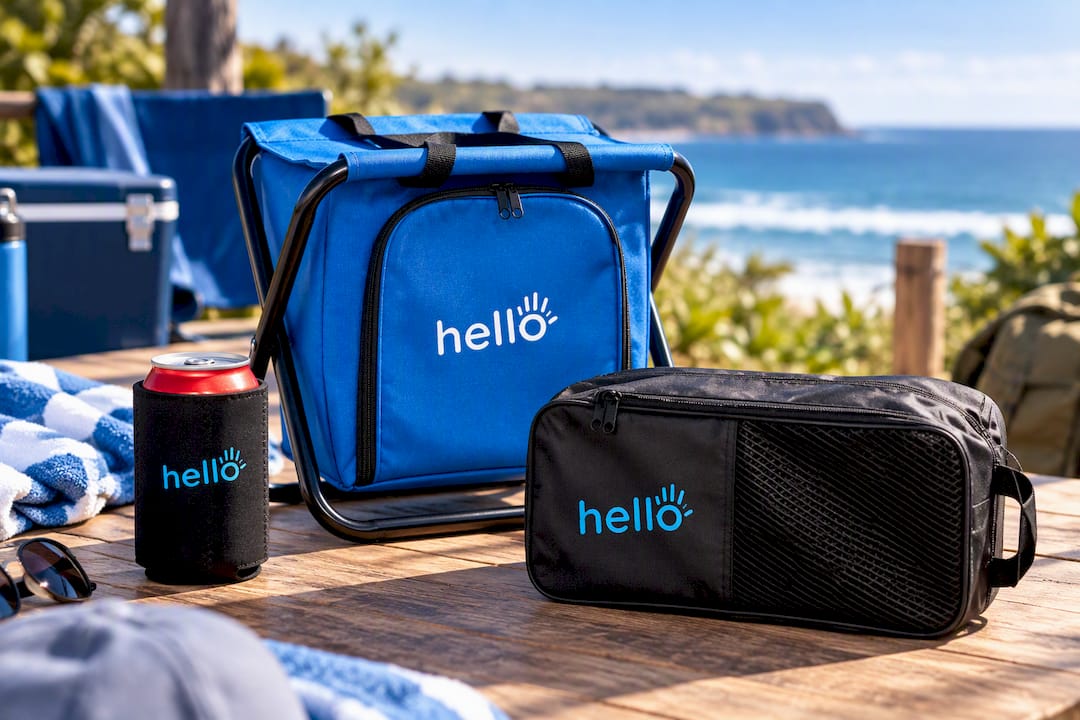
The Premium Neoprene Stubby Cooler suits high-volume event giveaways where cost per unit matters most. The Alaska Cooler Seat works as a standout client gift that doubles as seating at outdoor events. The Shoe Bag rounds out a merch pack when you need a second branded item alongside the cooler.
- Request a quote for your preferred style and quantity.
- Order a sample to check insulation and finish before committing to a full run.
- Use the free artwork service to get a print-ready proof at no extra cost.
- Mention the Price Beat Guarantee if you’ve received a lower quote elsewhere.
Browse the full range of custom branding options to start your order.
Sources
This guide draws on ACCC guidance on environmental claims, the Clorox penalty decision, and Food Standards guidance on transporting food safely.
- Transporting food safely | Food Standards Australia New Zealand
FAQ
What is the best insulation type for a branded cooler bag?
Neoprene suits small items like stubby coolers, giving flexible, durable insulation in a compact format. Larger bags typically use PE foam with a foil barrier and a PEVA liner, which holds cold longer for lunch-sized or picnic bags.
How long does a cooler bag keep food cold?
A well-insulated bag with ice bricks can hold food at or below 5°C for around two to four hours, which is a realistic benchmark rather than an all-day guarantee. Performance depends on how full the bag is and how often it’s opened.
What print method works best on cooler bags?
Heat transfer suits neoprene and small curved surfaces, while screen printing gives crisp results on 600D polyester panels. Choice depends on the fabric and the level of colour detail in your logo.
How do I know if a “recycled” or “eco-friendly” cooler bag claim is genuine?
Ask the supplier for the exact recycled percentage and which part of the bag it applies to, along with supporting documentation. The ACCC has penalised businesses for vague or unsubstantiated recycled-material claims, so specifics matter more than a green logo.
What is the minimum order quantity for branded cooler bags?
Minimum order quantities vary by bag style and complexity, with simpler stubby coolers generally allowing smaller runs. PromoShop can confirm exact minimums and pricing for your chosen style through a quote request.