


September 16, 2026
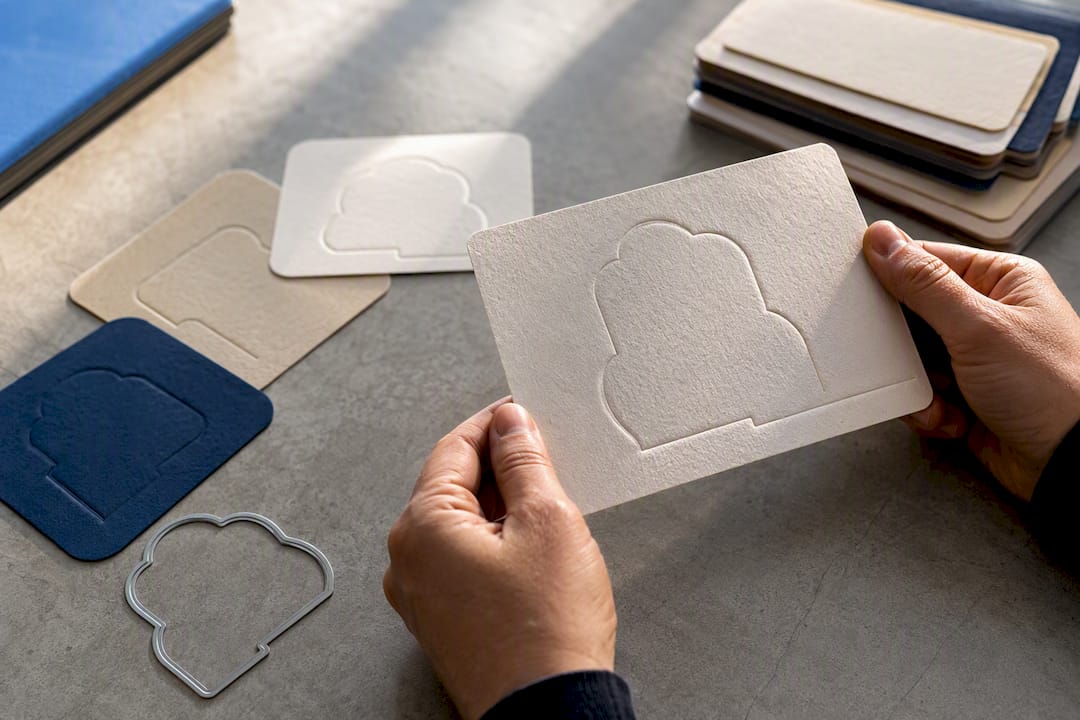
Embossing raises a design above the surface of your material; debossing presses it in. Pick embossing when you want a bold, light-catching focal point, and debossing when you want something quieter that reads as premium without shouting. Both rely on custom-etched dies and serious mechanical pressure, and as Promoshop has found across 25-plus years of producing branded merchandise, the right choice usually comes down to the substrate and how the finished item will be handled.
TL;DR:
- The choice between embossing and debossing largely depends on the material’s ability to rebound; heavy cardstock and long-fiber papers support embossing better than leather or fabric.
- Debossing is more durable for items with frequent handling, as the recessed mark resists flattening and wear over time, unlike raised embossing which can flatten or crack.
- The upfront costs are similar for both finishes because a custom metal die is required, but large runs drastically reduce per-unit expenses.
- Material selection and proper artwork, especially maintaining a minimum line weight of 0.5pt, are crucial to avoid show-through or bruising during production.
- Combining finishes like foil stamping with embossing enhances visual impact, while spot UV pairs with embossing but not debossing, due to material cracking issues.
Table of Contents
- Deboss vs emboss: how the two finishes are actually made
- Which finish should you choose for your design?
- Materials matter more than most designers expect
- What does a deboss or emboss job actually cost?
- How to brief your printer without costly rework
- How Promoshop applies these finishes to promotional merchandise
- Durability and wear: which finish holds up longer?
- Which industries lean toward debossing, and which prefer embossing?
- Are these finishes sustainable, or just another production step?
- Our take: stop treating this as a style decision
- Ready to order a proof? Here’s how Promoshop gets it done
- Sources
- FAQ
Deboss vs emboss: how the two finishes are actually made
Both techniques use a two-part die system, a male die and a female die, that clamp your material between them under heavy pressure. The male die pushes into the substrate while the female die shapes the reverse, and depending on which side faces up, you get a raised (embossed) or recessed (debossed) result from essentially the same tooling. Precision-etched dies and high-pressure machinery are what separate a crisp finish from a mushy one, and this is not a technique you can approximate with a cheap stamp.
From there, the variations multiply:
- Blind embossing or debossing creates a raised or recessed impression with no ink or foil at all, relying purely on shadow and texture.
- Registered (printed) embossing aligns a raised or recessed area precisely over existing printed artwork, which demands tighter tolerances from your printer.
- Combination or foil embossing uses a single die to foil-stamp and emboss in one pass, giving you shine and dimension together.
- Multi-level and sculpted dies create stepped or contoured depth for more elaborate logos or packaging.
Every one of these starts with a custom die, and that’s a fixed upfront cost you pay regardless of finish type. It shapes almost every decision that follows, from run size to whether the job is worth doing at all for a one-off print.
Which finish should you choose for your design?
Raised elements catch light and cast shadow, which is why embossing draws the eye straight to a logo, headline, or focal graphic. It reads as bold and confident, the kind of finish that says “look here first.” Debossing does the opposite: it sits quietly in the material, adding tactile richness without demanding attention, which is exactly why it turns up so often on leather goods, minimalist packaging, and premium stationery where subtlety is the point.
- Embossing suits logos, mastheads, and any single hero element you want to dominate a page or cover.
- Debossing suits background textures, repeated patterns, fabric branding, and any surface where a raised edge would catch on other objects or wear down with handling.
- Foil stamping pairs naturally with embossing, since combination dies can apply both in one pass for maximum shine and depth.
- Spot UV works with embossing but not debossing, because pressing a die into a cured UV coating tends to crack it along the impression edge.
- Lamination generally survives embossing better than debossing, since a recessed impression can trap or distort a laminate film at the edges.
Get the pairing wrong and you won’t know until the proof comes back cracked or wrinkled, which is an expensive way to learn the rule.
Materials matter more than most designers expect
Paper weight and fibre content decide whether your impression looks sharp or falls flat. Professionals lean toward heavy cover stocks, around 300gsm or 130lb, because thinner sheets simply don’t have the body to hold a deep impression without tearing. Long-fibre or 100% cotton papers compress and spring back better than standard bond stock, which is why premium business cards and invitations so often use them.
Cloth, leather, and faux leather behave differently again. Debossing tends to be the safer pick here, since embossing depends on the material rebounding back toward its original shape, and most leathers and heavier fabrics simply don’t bounce back the way cardstock does. A pressed-in mark holds; a pushed-up one can flatten within days of handling.
Two production risks show up again and again:
- Show-through happens when pressure is too high for the stock, leaving a visible ghost of the impression on the reverse side of the sheet.
- The “bruise” effect appears as a faint ring or wrinkle around the edge of the die impression, usually from miscalibrated pressure or artwork with lines too thin to hold their shape.
Minimum line weight matters here too. Keep your artwork vector-based and avoid anything thinner than roughly 0.5pt, since fine details below that threshold tend to blur or collapse under die pressure.
Pro Tip: If you’re not sure whether your stock will hold the impression, ask for a die-cut proof on the actual paper or fabric you plan to use in production. A digital mockup will never show you show-through or bruising.
What does a deboss or emboss job actually cost?
The die is the expense that catches people off guard. Both embossing and debossing need a custom metal die before a single unit gets pressed, and that upfront cost is fixed regardless of order size, so it gets amortised across your run. Order 100 units and you’re carrying the full die cost on a small batch. Order 5,000 and that same cost barely registers per unit.
- Setup costs run roughly the same whether you choose emboss or deboss, since the die complexity, not the direction of the press, drives price.
- More finished areas, multiple logos, text plus a graphic, a multi-level design, all add tooling cost and production time.
- For very short runs, ask about digital or alternative finishing options before committing to a custom die.
- Always request a physical proof before greenlighting the full run. A proof charge is cheap insurance against a ruined batch.
If budget is the deciding factor on your project, it’s worth checking promotional products by price before locking in a finish, since some substrates and run sizes make embossing or debossing far more cost-effective than others.
How to brief your printer without costly rework
Get these details sorted before you send artwork, and you’ll avoid the two most common causes of delay: unclear specs and mismatched expectations.
- Supply vector artwork with clean paths, no rasterised elements, and nothing thinner than the 0.5pt minimum line weight your printer specifies.
- State blind or registered clearly, and if registered, include separation files showing exact alignment with printed elements.
- Specify expected depth in millimetres rather than leaving “how deep” to guesswork. Depth affects die cost and material choice.
- Ask about die material and lead time, since steel dies take longer to produce than brass but hold detail better over long runs.
- Confirm compatible finishes upfront, particularly if you want foil, spot UV, or lamination alongside the deboss or emboss.
- Request a sample or proof policy in writing so you know what a correction costs if the first proof doesn’t hold up.
Pro Tip: Send your printer a physical sample of the exact stock or fabric you intend to use, even if it’s just an offcut. Screen colours and digital previews cannot predict how a specific material will hold a die impression.
For a broader look at finishing options beyond embossing and debossing, PromoShop’s printing options page runs through what’s available for different product categories.
How Promoshop applies these finishes to promotional merchandise
Promoshop weighs three things before recommending a finish on any branded merchandise order: how durable the item needs to be, how it will be handled day-to-day, and how prominent the branding needs to look. A leather-look folio that gets tossed in a bag every day is a different brief to a display item meant to be seen from across a room.
Debossing tends to suit apparel accessories, leather-style goods, and anything that takes repeated handling, since the mark sits below the surface. Embossing gets reserved for hero elements, awards, and items where a bold raised logo reinforces perceived quality on first touch. Backed by free artwork design and a factory-direct supply chain, Promoshop matches finish to product rather than defaulting to one technique across an entire catalogue.
Durability and wear: which finish holds up longer?
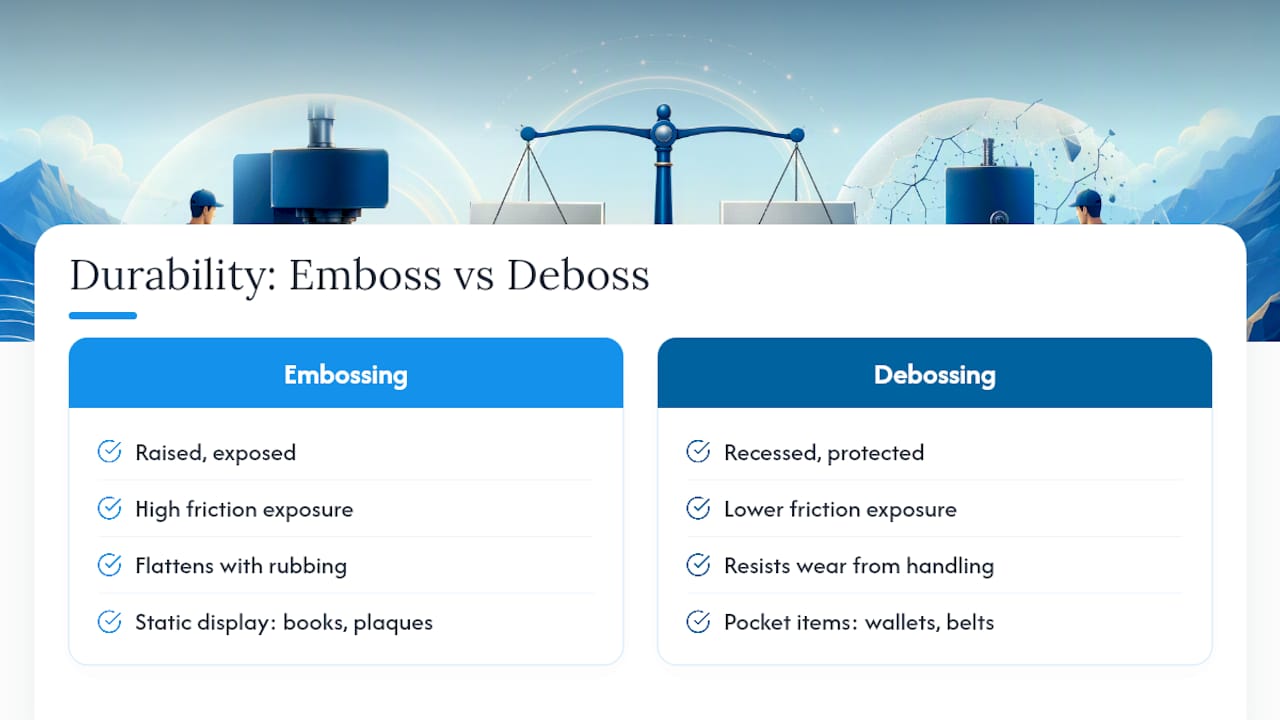
This is where the practical difference between embossing and debossing shows up fastest, often within weeks rather than years. A raised surface sits proud of the material, which means it takes the brunt of friction every time the item is handled, folded, or stacked against something else. Embossed surfaces on items like wallets can flatten over time with repeated rubbing, gradually losing the crispness that made the finish worth choosing in the first place.
Debossed impressions behave differently because they’re recessed rather than exposed. The surrounding material takes most of the abrasion, protecting the impression itself, which is why debossing tends to outlast embossing on items that get carried, gripped, or rubbed against other objects daily: belts, wallets, laptop sleeves, phone cases.
That doesn’t make embossing the wrong choice for durability-sensitive items across the board. A rigid item like a hardcover book or an award plaque doesn’t flex or rub the way a wallet does, so an embossed logo can hold its shape for years in that context. The wear pattern really comes down to how much the item moves and what it rubs against, not the finish alone.
If you’re choosing between the two purely on longevity, ask yourself how the item will actually be used day to day. A display piece that sits still deserves different treatment to something that lives in a pocket or a bag. Debossing is the safer default whenever an item will see regular physical contact, while embossing earns its keep on items that stay relatively still and get looked at more than touched.
Which industries lean toward debossing, and which prefer embossing?
Leather goods and accessories overwhelmingly favour debossing, and it’s not just a style preference. Wallets, belts, folios, and journals get gripped, folded, and rubbed constantly, and a recessed mark survives that treatment far better than a raised one. Fashion and luggage brands use debossing on logo tabs and zip pulls for the same reason: those spots take the most physical wear on any bag.
Publishing and packaging tend to split depending on the product. Hardcover books and premium boxed sets often go with embossing because the cover sits relatively still and the raised texture reads as immediate quality when someone picks the item up. Cosmetics and spirits packaging frequently choose embossing for the same reason, since the raised branding on a bottle or box becomes part of the unboxing moment rather than something that needs to survive years of handling.
Corporate stationery and awards split too. Business cards and letterhead often use registered embossing to make a company name or logo pop without adding colour. Awards and plaques lean embossed almost by default, since a recessed engraving on a static object doesn’t deliver the same visual impact as a raised one under gallery lighting.
Promotional merchandise sits somewhere in between, and the right call depends heavily on the product. Textile branding, patches, and tags on apparel or bags tend toward debossing because they’re handled constantly. Hard-cased items like notebooks, boxed gift sets, or plaques lean embossed because they get displayed more than gripped.
Are these finishes sustainable, or just another production step?
Neither embossing nor debossing requires ink, so both cut down on the chemical load compared to standard litho or digital printing when used as a standalone blind finish. There’s no solvent-based ink to dry, no plate wash to dispose of, and blind embossing in particular can replace a printed element entirely on some designs.
The environmental trade-off sits with the die itself. A custom metal die takes energy and raw material to produce, and it’s a physical object that eventually gets discarded or replaced when a design changes. That’s a real cost, but it’s a one-time cost per design rather than a recurring one, which is a meaningful difference from ink-heavy printing that consumes materials on every single run.
Paper choice matters just as much as the finishing technique. Long-fibre and cotton stocks that hold impressions well are often available in recycled or FSC-certified options, so choosing embossing or debossing doesn’t force a trade-off against using responsibly sourced paper. The same goes for leather alternatives: many faux leather substrates used for debossed goods now come from recycled or plant-based materials rather than traditional PVC.
If sustainability is a genuine priority for your order, ask your supplier two direct questions: where the base material is sourced, and whether the die will be reused across future runs rather than scrapped after one job. Those two answers tell you more about the environmental footprint of a finishing job than the technique itself ever will.
Our take: stop treating this as a style decision
The industry tends to frame deboss vs emboss as a taste call, raised looks bold, recessed looks classy, pick your vibe. That framing undersells what’s actually driving the outcome, which is material behaviour and handling, not aesthetic preference alone.
The conventional advice skips over the fact that embossing depends on your substrate bouncing back into shape after the die releases pressure. Push that logic onto leather or heavy cloth and you’ll often get a shallow, disappointing result no matter how good the die is. That’s a mechanical constraint, not a design opinion, and it should decide your finish before colour palettes or brand guidelines even enter the conversation.
If we had to name the single most overlooked factor, it’s durability under real-world handling. Plenty of buyers pick embossing for a wallet or a bag tab because it photographs beautifully on day one, then wonder why the logo looks flat within a season. Ask how the item will be touched, gripped, or stacked before you ask how it will look on a shelf. Get that sequence right and the aesthetic choice usually sorts itself out.
— SEO
Ready to order a proof? Here’s how Promoshop gets it done
Promoshop sources merchandise factory-direct, which keeps quality consistent and pricing sharp on custom finishing work, and every order comes with free artwork design so your die specs and vector files get checked before anything goes to production. With options like express service and guarantees, the supplier caters to buyers who need proofs turned around fast without cutting corners on the die itself.
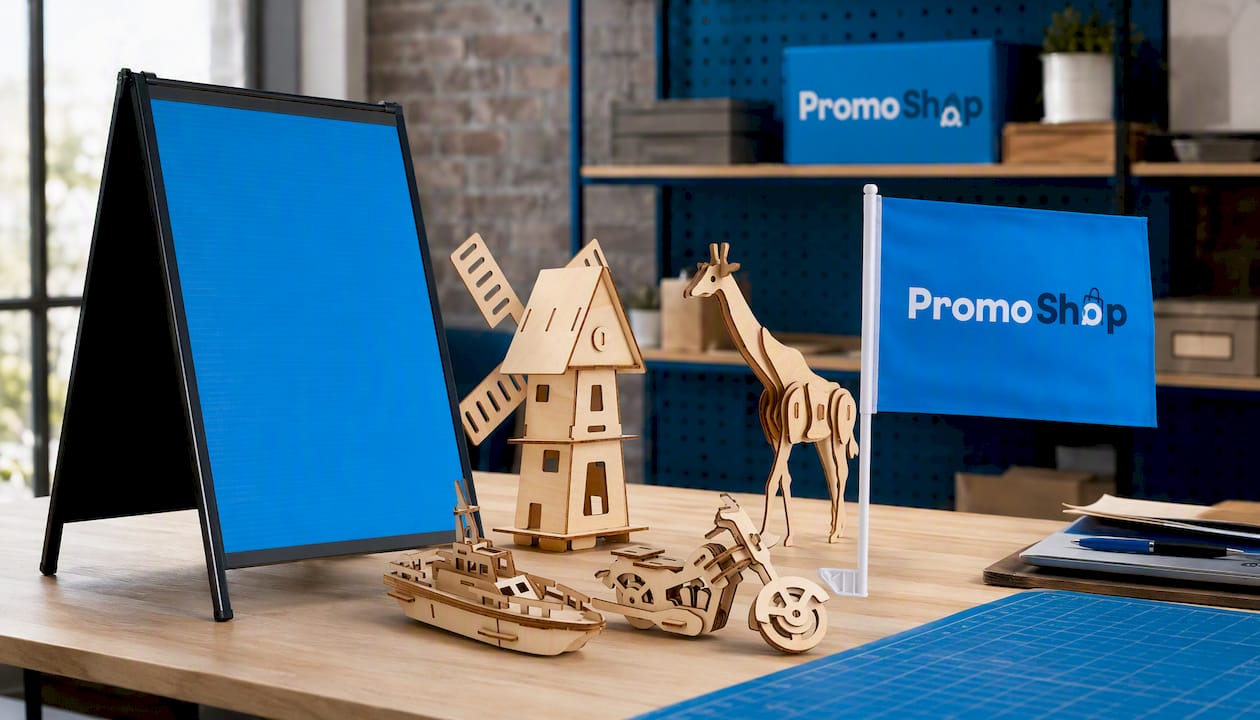
If you’re working on tactile branding for an upcoming campaign, a few categories in Promoshop’s catalogue show these finishes at work. The BRANDCRAFT Custom Design Model, Indent demonstrates an indented finish similar to debossing on a fully customisable product line, ideal if you want to test the effect before committing to a larger run. For large-format needs, the Corflute Insert A-Frames Banner suits projects where inset panel branding matters, and Car Flags offer a simpler entry point if you’re branding accessories or tags alongside a bigger order.
Ready to get specific numbers on your project? Request a quote from Promoshop and get a proof moving before your next campaign deadline.
Sources
These sources back the technical and cost details covered above:
FAQ
What does debossed look like?
A debossed mark is pressed into the material rather than raised above it, appearing as a recessed shape you can see and feel with a fingertip. It typically reads as subtle and understated compared with an embossed finish, which is why it suits leather goods and minimalist packaging.
Do you emboss or deboss leather?
Debossing generally works better on leather and faux leather because embossing relies on the substrate rebounding back into shape after the die lifts, and most leathers don’t spring back the way heavy cardstock does. That’s why wallets, belts, and leather journals so often carry a debossed logo rather than a raised one.
Is it debossed or embossed?
Debossed means pressed in below the surface; embossed means raised above it. Both come from the same two-part die process, with the difference determined by which side of the die faces the material.
What does deboss mean?
Debossing is a finishing technique where a heated or unheated die presses a design into paper, leather, or fabric, leaving a recessed impression rather than adding ink or raising the surface. It’s commonly used for a quieter, tactile branding effect that holds up well under repeated handling.