

October 26, 2026
The lid decides how a bottle or cup works day to day. It controls spills, drinking speed, temperature and how easy the drinkware is to clean. This guide explains each main lid type, what it suits and what to check before you buy, whether you want one for yourself or a branded run for your business.
TL;DR
- The main lid types are screw caps, flip lids, push-button lids, straw lids, sports and sipper lids, press-on lids and silicone lids.
- “Splashproof” and “leakproof” are not the same thing. Only a leakproof lid is made for a bag.
- A lid’s heat limit can be lower than the bottle’s. Check both before you pour in a hot drink.
- Interchangeable lids only fit the bottles they were made for. Match the neck and thread, not the look.
- For branded drinkware, choose the lid for the person using it, then pick the print area that suits.
Table of Contents
- The main drinkware lid types
- Lid types compared
- Splashproof or leakproof: know the difference
- Hot drinks, cold drinks and lid limits
- Interchangeable lids and fit
- Takeaway cup lids and reusable lids
- Cleaning and caring for lids
- How to choose a lid for branded drinkware
- Our view on lids
- Get branded drinkware with the right lid
- FAQ
- Sources
The main drinkware lid types
People use many names for the same lid. These are the terms you will see most often on product pages in Australia.
Screw caps
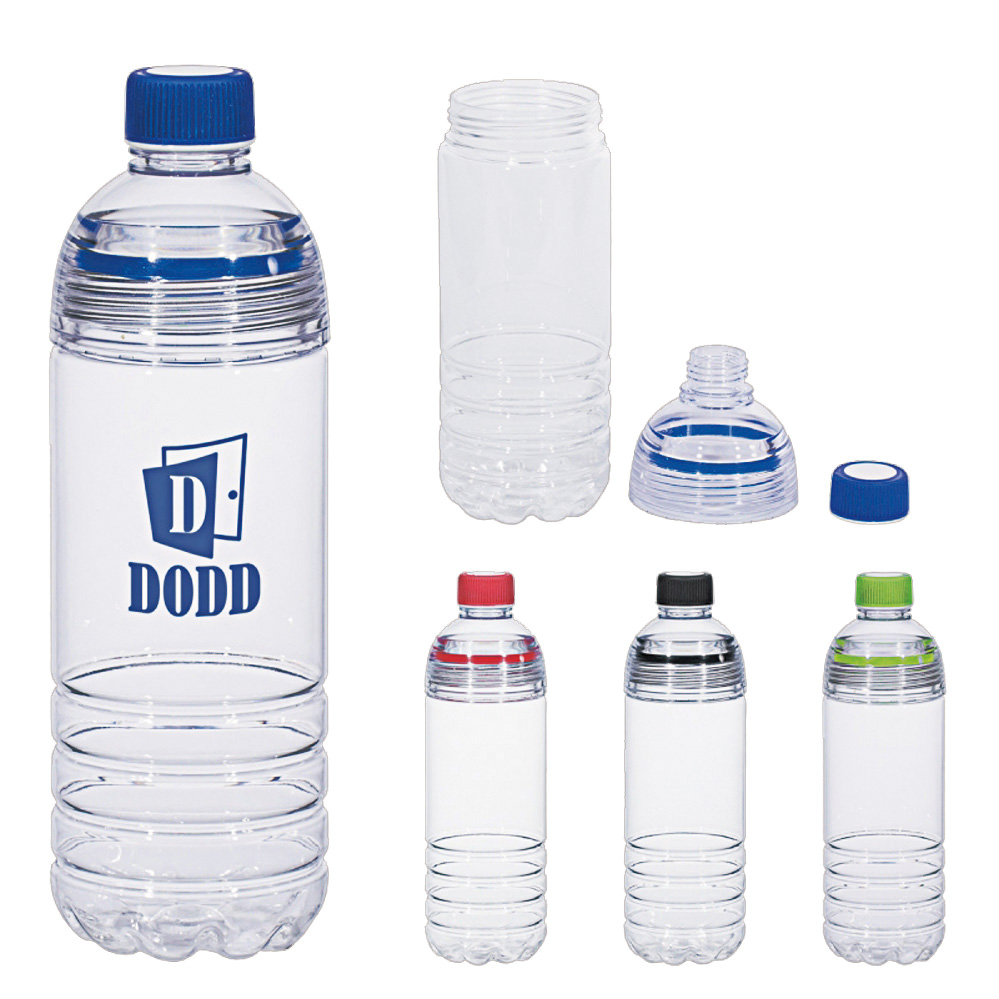
A screw cap twists onto a thread on the bottle neck. It is the simplest and most secure design. A seal ring inside the cap does the sealing.
Screw caps suit water bottles that travel in bags, gym kits and car door pockets. They are slower to use, because you twist them off each time. Wide-mouth versions are easier to fill and clean, and they take ice cubes.
Flip lids
A flip lid has a hinged cover over a drinking spout or opening. You lift the cover with a thumb, drink, then press it closed. Many have a small latch or a silicone seal.
Flip lids are popular on thermo bottles and reusable coffee cups. They allow one-handed use. Check whether the lid is marked as leakproof or only splashproof. A flip lid without a good seal can drip when it is knocked.
We stock this style across our range, including the Flip Lid Thermo Bottle and the Flip Lid Thermo Bottle Large.
Push-button lids
A push-button lid opens when you press a button. A spring lifts the cover or spout. Some lock the button so it cannot open in a bag.
These are quick and easy with one hand. They have more moving parts than a screw cap. Look for a lock setting if you plan to carry the bottle loose.
Straw lids
A straw lid has a built-in straw, usually silicone or stainless steel. You sip without tilting the bottle. Some straws fold away under a cover.
Straw lids are good at a desk, in the car and at the gym. They suit cold drinks best. Many makers say their straw lids are not for hot drinks, even when the bottle itself is insulated. Always read the heat limit for the lid.
Sports and sipper lids
A sports lid has a push-pull spout or a soft silicone nozzle. You open it with your teeth or fingers and squeeze or suck to drink. A sipper lid on a coffee cup has a small drinking opening and a cover.
They suit exercise, school and kids. A sip guard or vent helps reduce spills while keeping the flow steady. Most are made for cold drinks only.
Press-on lids
A press-on lid sits on the rim by friction. There is no thread. It is common on reusable coffee cups and on disposable cups.
These lids are light and easy to clean. They are usually splashproof, not leakproof. They are fine for a short walk from the café to the office. They are a poor choice for a bumpy bus ride or a bag.
Silicone lids
A silicone lid is soft and stretches over the rim. It forms a tight fit on glass and ceramic cups. Some have a sip hole with a small plug.
Silicone lids suit glass and plastic coffee cups. They are easy to wash and quiet in use. Our 12oz glass Karma Kup with a silicone lid is one example.
Chug and wide-mouth lids
A chug lid has a large spout for fast, high-flow drinking. It suits sport, the worksite and long days outdoors. It gives the most water per sip and the least control. Keep it for cold or room-temperature water.
Lid types compared
This table gives a quick view. Always confirm the specifics on the product page, because designs differ between makers.
| Lid type | Best for | Spill resistance | Hot drinks | One-handed use |
|---|---|---|---|---|
| Screw cap | Bags, gym, travel | High | Often yes, if the bottle allows | No |
| Flip lid | Desk, commute, coffee | Medium to high | Often yes | Yes |
| Push-button lid | Everyday carry | Medium to high | Depends on model | Yes |
| Straw lid | Desk, car, gym | Medium | Usually no | Yes |
| Sports or sipper lid | Exercise, kids | Medium | Usually no | Yes |
| Press-on lid | Short walks | Low (splashproof) | Yes | Yes |
| Silicone lid | Glass and plastic cups | Low to medium | Yes, check the maker | Yes |
| Chug lid | Sport, outdoors | Low to medium | Usually no | Yes |
Splashproof or leakproof: know the difference
These two words matter more than any other on a lid description.
Splashproof means the lid handles small movements. Liquid should stay in when you walk. It can escape if the cup tips or turns upside down.
Leakproof means the lid is sealed for carrying. You can put the bottle in a bag. Many leakproof lids need to be fully closed or locked to work.
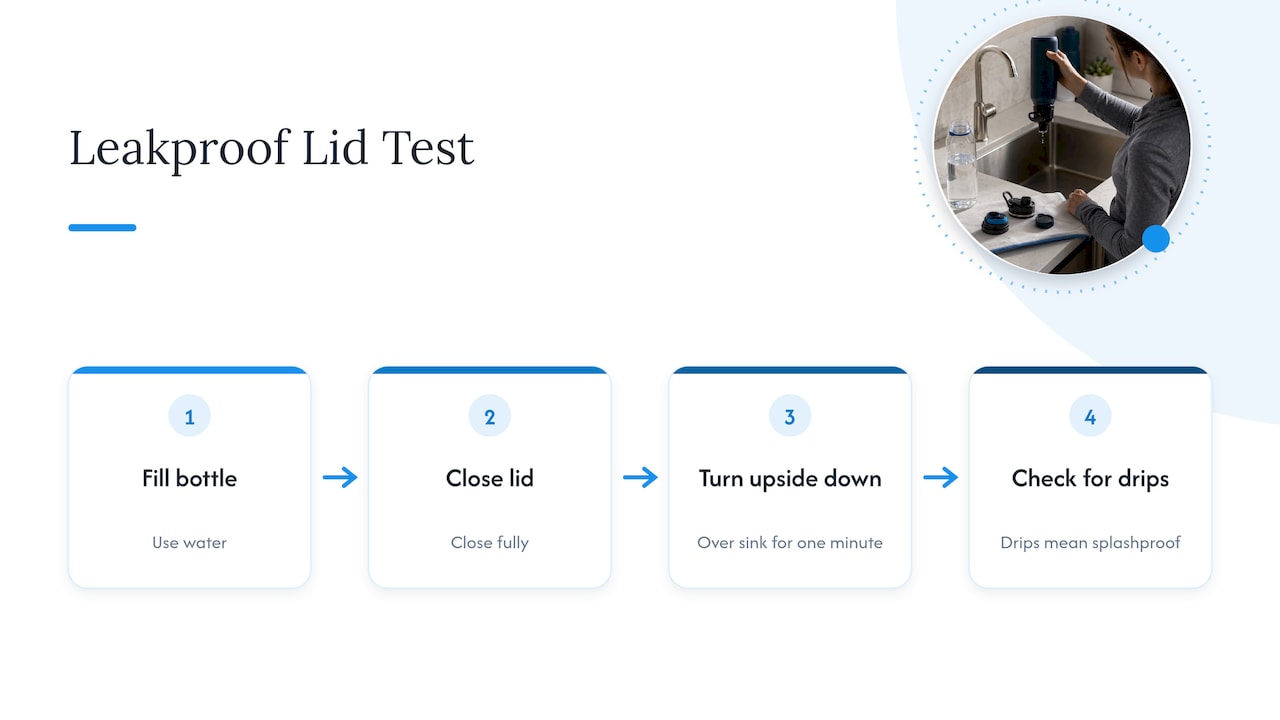
A simple test helps. Fill the bottle with water, close the lid fully, then hold it upside down over the sink for a minute. Do this before you put it in a bag with a laptop. If it drips, treat it as splashproof.
For commuters, a screw-top, a silicone-sealed flip lid or a locking mouthpiece is safer than a plain press-on lid. This matches the advice of a low-waste commuter coffee guide that calls a press-on lid risky on a bumpy bus.
Hot drinks, cold drinks and lid limits
An insulated bottle can keep a drink hot. That does not mean every lid for that bottle is safe for hot liquid. A straw lid or sports lid can be rated for cold drinks only, even on a double-wall steel body.
Check these three points on the product page:
- The temperature limit of the lid. Some makers state a limit. Some say no hot drinks at all.
- Carbonated drinks. Fizzy drinks build pressure. Most sealed lids are not made for them.
- Venting. A hot drink in a tightly sealed lid can push liquid out when you open it. Open it slowly, away from your face.
For hot coffee, a flip lid or a press-on lid with a sipping hole is the usual choice. For ice water, a straw lid or chug lid is easy to use. If you want one bottle for both, pick a model with swappable lids.
Interchangeable lids and fit
Some bottles come with several lids that swap on one body. You might use a straw lid at the desk, a screw cap in a bag and a wide cap for coffee. It is a handy system, but fit is strict.
A lid fits a bottle because of its neck finish: the thread, the diameter and the shape of the opening. A packaging closure guide explains that threaded closures must be matched to the neck of the container. A lid that looks the same can still fail to seal.
Before you buy a spare lid:
- Stay within the same brand and range.
- Match the mouth size, such as narrow or wide.
- Check the thread type, internal or external.
- Read the compatibility list on the lid page.
- Test it with water before you rely on it.
For branded orders, interchangeable lids add cost and complexity. A single well-chosen lid is usually the better fit for a giveaway. Ask us if you want to talk through options.
Takeaway cup lids and reusable lids
Disposable coffee cup lids have their own names. Cafés call them coffee cup lids or hot cup lids. Common shapes include:
- Flat lids with a sip hole. Used for hot drinks.
- Dome lids. These give room for cream or toppings, so they suit cold drinks like milkshakes and smoothies.
- Straw-slot lids. For quick sipping with a straw.
- No-hole lids. For sealed transport and storage.
A hot cup lid is made to fit the cup size it was designed for. In Australia, disposable lids may be made from plant fibre, paper or bioplastic. Some are certified compostable to an Australian standard, either home or industrial. Industrial composting needs a facility that accepts them, so check your local council or café.
Reusable lids are built for repeat use. They are thicker, they have better seals and they handle a dishwasher. If your business gives out coffee cups, a reusable lid stays with the customer far longer than a disposable one.
Cleaning and caring for lids
Lids hold the most hidden dirt. The seal ring, the straw and the spout trap liquid.
- Take it apart. Remove seals, plugs and straws when the lid allows it. Some lids let you pull the inner mechanism out in one piece.
- Wash after each use. Warm water and mild detergent work. Use a small brush for straws.
- Check dishwasher advice. Many lids are top-rack safe. Some are not. Read the care label.
- Dry fully. Leave parts apart to air dry. Damp seals can smell.
- Replace worn seals. A cracked or stretched ring is the usual cause of a new leak.
- Avoid heat damage. Do not use a lid beyond its stated temperature.
How to choose a lid for branded drinkware
A lid is not just a part of the bottle. It is the part people touch most. It affects how long the item is used and how often your logo is seen.
Ask these questions before you order:
- Who uses it? Office staff, sports teams, tradies, students and event guests all need different lids.
- What is in it? Water, coffee, tea or a protein shake.
- Where does it go? A desk, a car cupholder, a backpack.
- How is it cleaned? Dishwasher-safe lids are practical for staff gifts.
- Where does the logo go? Check the print area on the body and, if it suits, on the lid.
Here are some quick matches:
- Office and client gifts: a flip lid thermo bottle or a reusable coffee cup. See our reusable coffee cups.
- Sport and events: a lightweight plastic bottle such as the Tritan Bottle or the Quencher Bottle.
- Cafés and eco-minded brands: a Karma Kup in 8oz clear plastic with a flip lid, 12oz with a cork band or 16oz large.
If the lid you want is not listed, ask. We can help you find a close match.
Our view on lids
We have supplied branded merchandise for over 25 years. Here is what we tell customers.
Pick the lid first, then the bottle. Most complaints about drinkware come from the wrong lid, not the wrong bottle. A leaking lid in a bag turns a nice gift into a bad memory of your brand.
Keep it simple for giveaways. A flip lid or screw cap is easy to understand without instructions. Complex lids can confuse users and raise questions about cleaning.
Be honest about heat. If the drinkware is for coffee, choose a lid made for hot drinks. If it is for water, say so.
Ask about the print. Lids can limit the print area. Tell us where you want the logo and we will check it before production. Our free artwork service helps get the design right.
We source factory-direct, which helps us keep quality consistent across a run and prices competitive. If you find a lower price on the same product, our Price Beat Guarantee applies.
— PromoShop
Get branded drinkware with the right lid
Ready to order? Browse our promotional drinkware range for bottles, cups and travel mugs with flip, screw, silicone and sipper lids. Tell us your quantity, drink type and deadline. We offer custom branding, free artwork design and an express service for tight timelines. You can start on our home page and get in touch with our team.
FAQ
What are the most common bottle lid types?
The most common are screw caps, flip lids, push-button lids, straw lids and sports or sipper lids. Screw caps are the most secure. Flip and straw lids are the easiest for one-handed use.
What is the best lid for a leakproof bottle?
A screw cap with a seal ring is the most reliable. A locking flip lid or push-button lid with a silicone seal can also be leakproof. Check that the product is described as leakproof, not splashproof, and test it with water first.
Can I use any lid on any bottle?
No. A lid must match the bottle’s thread, neck size and design. Stay within the same range and read the compatibility details. A similar-looking lid may not seal.
Are straw lids safe for hot drinks?
Often they are not. Many straw lids are made for cold or room-temperature drinks only, even if the bottle is insulated. Check the maker’s stated limit before you pour in tea or coffee.
What is the lid on a coffee cup called?
It is usually called a coffee cup lid or hot cup lid. Dome lids, flat lids and sip-hole lids are the common shapes. Reusable cups often use a flip lid or silicone lid instead.