
October 11, 2026
Branded beanies are a cost-effective wearable promotion that drives repeat impressions and digital engagement when we match the style to the right audience and produce it to a proper quality standard. They work well for event giveaways, staff uniforms and client gifting. We’ll walk you through the use cases, materials, decoration and ordering steps you need before you brief a supplier.
TL;DR:
- Use acrylic or polyester for high volume giveaways, and reserve merino or wool for gifts where warmth and a softer feel justify higher cost.
- Choose embroidery for durable, clean line logos, patches for fine detail, and full color printing for gradients; request a physical sample for intricate stitching.
- If exclusive rights matter, start trade mark clearance early: registration takes at least 7 months and costs a minimum of $250.
- Because 66% of recipients visit a brand’s digital channels after useful gifts, add a hashtag or photo prompt to encourage sharing.
- Use beanies when recipients wear headwear and cold weather is approaching; choose another item for summer campaigns or workplaces where headwear is unlikely.
Table of Contents
- Why branded beanies work and where to use them
- Styles, materials and quality tiers: choosing construction that matches your brand promise
- Customisation and artwork: decoration methods, mock-ups and approval tips
- Ordering, cost drivers and trade mark basics before you produce branded beanies
- How an experienced supplier reduces risk and saves time
- Care and maintenance tips to keep branded beanies looking sharp
- Packaging options to lift the unboxing experience
- Getting the size right for different audiences
- Making the most of branded beanies after you’ve handed them out
- When to choose beanies versus other merch
- Get your branded beanies quoted and produced
- FAQ
- Sources
Why branded beanies work and where to use them
Beanies earn their spot in a marketing budget because people actually wear them, and every wear is another impression for your brand. The APPA end-user research found that a high proportion of recipients recall the brand on a promotional item they received, and many go on to advocate for that brand to others. Even better for digital marketers: a significant number of recipients visit a brand’s website or social channels after receiving a useful physical gift, and many say the gift increases their intent to purchase. That’s the “phygital” effect in action: a physical item becomes the trigger for an online action you can actually measure.
A few use cases consistently perform well for Australian marketing teams:
- Event giveaways at trade shows, festivals or sporting sponsorships where visibility in a crowd matters.
- Staff uniforms and onboarding kits that build a consistent, recognisable team look in winter.
- Client gifting at EOFY or during the holidays, paired with a handwritten note or a small kit.
- Retail or fan merchandise sold or gifted alongside other branded stock.
- Sponsorship activations where a beanie becomes a wearable extension of a logo placement.
Match the style to the audience. Outdoor workers want a snug, durable acrylic cuffed beanie that survives a work boot’s worth of wear. A streetwear-focused audience responds better to an oversized, uncuffed knit in a trend colour.
Styles, materials and quality tiers: choosing construction that matches your brand promise
The fabric you choose says as much about your brand as the logo on it. Acrylic and polyester are the workhorses of promotional beanies: affordable, colourfast and easy to care for, which makes them the right call for high-volume event giveaways. Merino and wool sit at the premium end, offering genuine warmth and a softer hand feel that suits client gifts or leadership team apparel where perceived quality matters more than unit cost. Blended yarns split the difference, giving you some of wool’s feel with acrylic’s price and durability.
Style choices matter just as much as fibre:
- Cuffed beanies read as classic and workwear-friendly; uncuffed styles feel more fashion-forward.
- A pom detail adds personality and works well for family or community-facing events.
- Knit weight affects both warmth and how crisp your embroidery looks on the finished cap.
- A fleece lining adds comfort for colder climates but adds to unit cost and lead time.
The IndexBox market analysis maps the Australian beanie market into clear price bands: ultra-value under $10, core mass-market between $10 and $25, premium from $25 to $60, and luxury above $60. Each band signals something different to the person wearing it, so pick the tier that matches what you want your brand to say. The same analysis points to growing demand for sustainable and traceable beanie options, so if sustainability claims matter to your audience, ask your supplier for the fibre source and any certification before you commit to artwork.
Customisation and artwork: decoration methods, mock-ups and approval tips
The decoration method you choose affects both durability and how premium the finished beanie looks. Embroidery is the most durable option and suits logos with clean lines; a woven label gives a premium, tag-like finish; patches handle fine design detail better than direct stitching; and full-colour print is the only realistic option when your artwork has gradients or photographic elements.
Before you send artwork, check these basics:
- Supply vector files (AI, EPS or high-resolution PDF) rather than low-resolution JPEGs.
- Confirm the cuff and crown placement area, since embroidery space on a ribbed cuff is smaller than it looks.
- Ask your supplier about recommended stitch counts for your logo size, since fine detail can “mush” on a looser knit.
- Choose thread or ink colours with enough contrast against the beanie colour to stay legible from a distance.
- Request a digital mock-up before production, and sign off on colour matching against your brand palette.
Pro Tip: Request a physical pre-production sample whenever your logo has fine detail or a high stitch count, since a photo mock-up can’t show you how embroidery will sit on a ribbed knit.
Ordering, cost drivers and trade mark basics before you produce branded beanies
Stocked beanie styles with standard decoration typically move faster than a fully custom knit, and an express service can compress that further when you’re working to a tight event date. Freight adds its own buffer, particularly for larger orders or regional delivery, so build that into your target date rather than treating production time as the whole timeline.
Minimum order quantities shape your budget more than most buyers expect:
- Staggering orders across two smaller runs can smooth cash flow for recurring campaigns.
- Combining a beanie order with another product category can sometimes help you reach a better per-unit price.
- Decoration complexity, premium fibres and custom packaging all push the price band up, while a simple one-colour embroidery on acrylic keeps costs down.
Before you finalise a design, check it’s actually yours to use. IP Australia’s timeframes and fees page confirms that trade mark registration can take several months from filing, with minimum fees starting at a modest amount, so a logo you plan to register should go through a clearance search well before your production deadline. IP Australia’s TM Checker tool gives an early indication of whether your mark is likely to be available in the relevant classes.
How an experienced supplier reduces risk and saves time
A supplier who handles the production detail for you removes most of the guesswork from a beanie order. We can assist with artwork design as part of the quote process, mocking up and colour-checking your logo before you commit to a quantity. An express service may be available for tighter event deadlines, and a price beat guarantee can help ensure competitive pricing.
Behind the scenes, we manage the parts that usually cause delays: digital mock-ups, colour approvals against your brand palette, pre-production samples for detailed logos, and packing and fulfilment ready for distribution.
To brief us efficiently, have these ready: your target delivery date, a vector artwork file, your brand colour codes, the quantity you need and any special delivery instructions for multiple sites.
Care and maintenance tips to keep branded beanies looking sharp
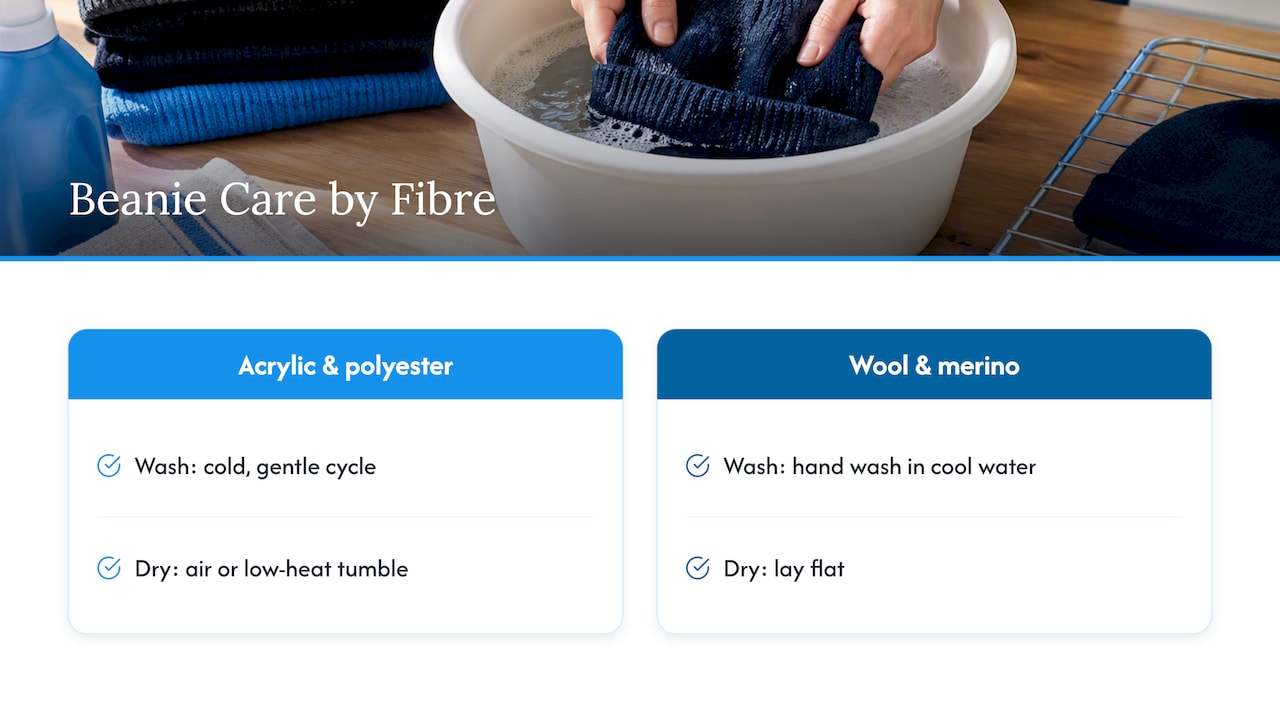
A beanie that pills, fades or loses shape after one wash stops doing its job as a brand carrier. CHOICE’s laundry guidance notes that acrylic and polyester generally tolerate a low-heat tumble dry, while wool and merino need gentler handling, so the right care advice depends entirely on the fibre you chose.
For acrylic and polyester beanies, a cold wash on a gentle cycle followed by air drying or a low-heat tumble keeps the colour and shape intact longest. Wool and merino beanies do better with a hand wash in cool water and laid flat to dry, since heat and agitation are what cause shrinkage and felting in natural fibres.
A short care note included with the beanie, or printed on a swing tag, helps recipients get more wear out of the item and keeps your logo looking crisp for longer. This matters more than it sounds: a beanie that still looks good after a season of wear keeps generating impressions, while one that’s gone bobbly and faded after a few washes gets retired to the bottom drawer. If you’re distributing beanies as part of a uniform programme, it’s worth briefing staff on the basic fibre-specific care at the same time you hand out the items.
Packaging options to lift the unboxing experience
How a beanie arrives shapes how it’s received, especially for client gifts or leadership kits where first impressions carry weight. A simple branded poly bag works fine for bulk event giveaways where speed and cost matter more than presentation.
For client gifting or executive kits, a kraft box or a branded gift box with tissue paper lifts the perceived value considerably, and it’s the kind of detail recipients photograph and share, feeding straight back into the digital engagement that APPA’s research points to. Pairing the beanie with a complementary item, such as a notebook or a drinkware piece, in a cohesive kit box tends to outperform sending the same items separately, since the whole package reads as more considered.
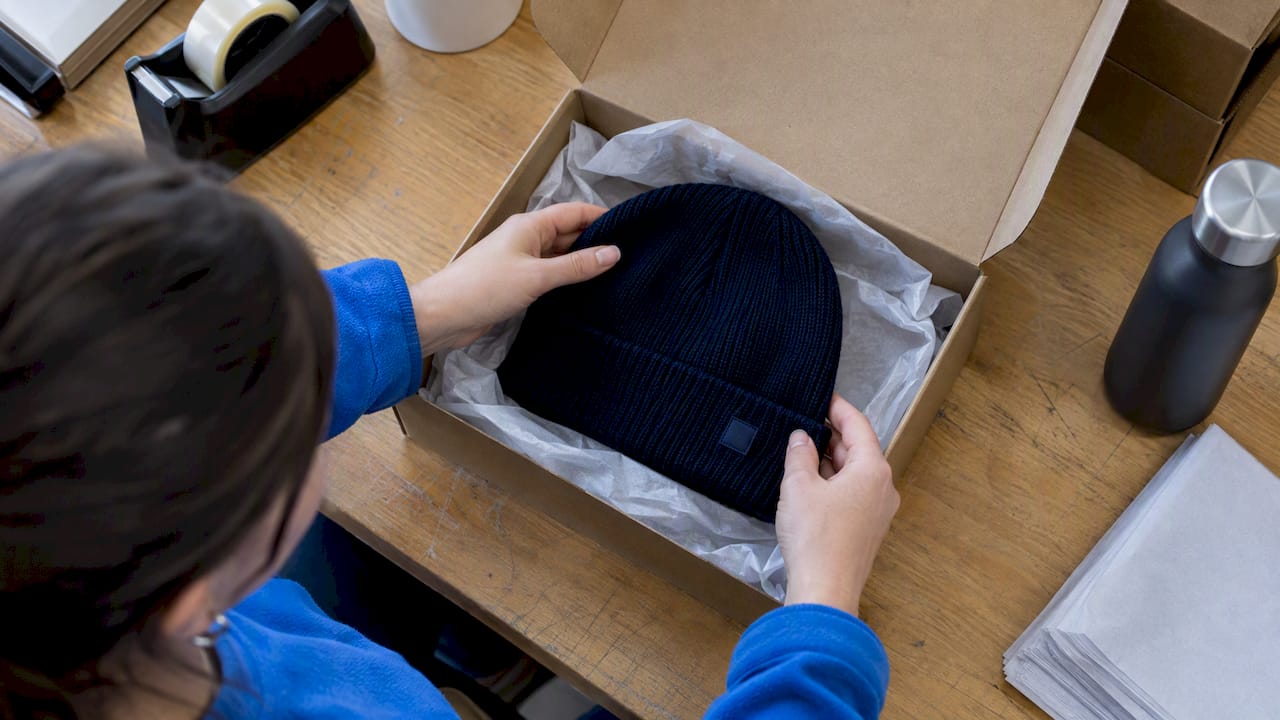
A branded swing tag or care card adds a small but effective touch: it reinforces your logo one more time before the beanie is even worn, and it’s the natural place to include the fibre-specific care guidance mentioned above. For retail or fan merchandise, consider packaging that doubles as in-store or event display, since the box itself becomes part of the brand presence on a shelf or table.
Keep packaging choices proportional to the campaign. A mass event giveaway doesn’t need a presentation box, but a client gift or a sponsorship VIP kit usually justifies the extra cost.
Getting the size right for different audiences
Most branded beanies are produced as one-size-fits-most, using a stretch knit that comfortably covers the typical adult head circumference range. This works for the vast majority of corporate and event distribution because it simplifies ordering, you’re not juggling multiple size SKUs across a large quantity, and it fits comfortably under most conditions.
Where sizing does matter is at the extremes: a kids’ or youth audience needs a genuinely smaller fit rather than a scaled-down adult beanie, since an oversized beanie on a child looks sloppy and won’t stay on. Some suppliers also offer a slightly larger fit for bulkier, lined winter styles, which is worth checking if your audience skews toward larger head sizes or you’re adding a thick fleece lining.
If you’re uncertain which fit suits your group, request a sample in advance and try it on a couple of team members before locking in the full order. This is a cheap way to avoid a batch of beanies that fit awkwardly on a meaningful portion of your recipients.
Making the most of branded beanies after you’ve handed them out
Distribution is only half the job. The data on digital follow-through is strong enough that it’s worth planning for deliberately rather than hoping it happens: with 66% of recipients visiting a brand’s digital channels after receiving a useful gift, a beanie without a clear next step wastes some of that momentum.
A printed or stitched hashtag, or a small card included at distribution encouraging recipients to tag your brand in a photo, turns a static item into a piece of user-generated content. Staff wearing branded beanies at events or on-site doubles as walking signage, so encourage your team to wear them during the campaign window rather than storing them away.
For retail or sponsorship activations, consider a simple social competition tied to wearing or photographing the beanie, since it gives recipients a reason to engage online rather than just accepting the gift passively. Timing matters too: distributing beanies just ahead of the cold season, rather than mid-winter when recipients may already be set on their outerwear, maximises the number of wears you get out of each unit before the season ends.
When to choose beanies versus other merch
Beanies earn their place when the season is right, your audience is likely to wear headwear daily, and you want a long campaign tail rather than a one-off moment. Choose an alternative for a summer campaign or a corporate audience unlikely to wear headwear at work. For a broader gifting campaign, add a beanie to a kit rather than relying on it alone.
— PromoShop
Get your branded beanies quoted and produced
We handle the parts of a beanie order that usually eat up your time: free artwork design on every quote, an express service when your event date is tight, and a Price Beat Guarantee so you’re not paying over the odds for the same spec.
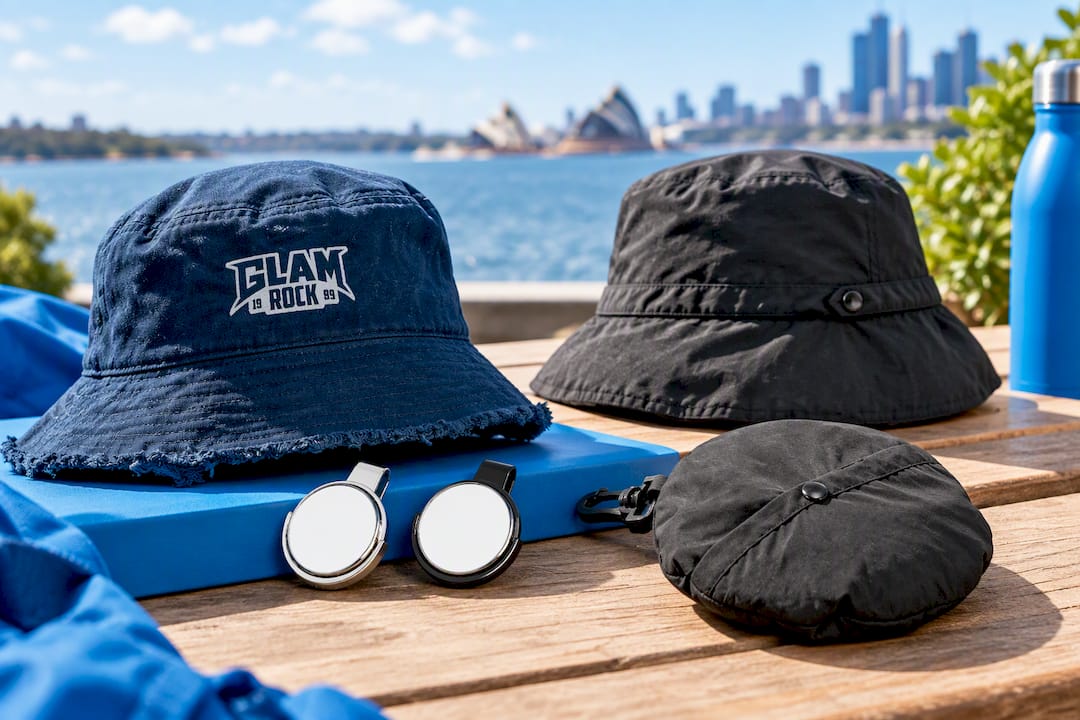
Browse our beanies category for current stock styles, or check out complementary headwear like the Raw Edge Bucket Hat, the Packable Bucket Hat, or add a Round Hat Clip & 24mm Ball Marker to round out a golf or outdoor event kit. If you’re planning a wider sustainable merchandise push for your office or workplace, our partners at Niche Projects cover environmentally friendly branding and office design worth a look alongside your merch strategy. Ready to move forward? Request a quote or upload your artwork and we’ll get your beanies into production.
FAQ
What makes branded beanies effective promotional merchandise?
Branded beanies get repeated wear across a whole season, which means repeated brand exposure for a single item cost. APPA’s end-user research found 81% recall and 66% of recipients visiting a brand’s digital channels after receiving a useful gift, which makes beanies a strong physical-to-digital bridge for a campaign.
How much do custom branded beanies typically cost?
Pricing depends on fibre, decoration and quantity, and the Australian market spans ultra-value under $10, core mass-market between $10 and $25, premium from $25 to $60, and luxury above $60. We quote against your specific brief, including any artwork and quantity, so you get an exact figure rather than an estimate.
What is the minimum order quantity for custom beanies?
Minimum order quantities vary by style and decoration method, and we quote this directly against your brief rather than publishing a fixed number across all styles. Staggering your order into two smaller runs can help manage budget if a single large minimum doesn’t suit your campaign.
Do I need to trade mark my logo before putting it on a beanie?
You don’t need a registered trade mark to put a logo on merchandise, but if you want exclusive rights to it, IP Australia notes that registration typically takes at least 7 months and costs a minimum of $250. It’s worth running a clearance search well ahead of your production deadline if registration matters to your brand.
How should I care for a branded beanie to keep it looking good?
Care depends on the fibre: CHOICE’s guidance notes acrylic and polyester generally tolerate a low-heat tumble dry, while wool and merino need a gentler hand wash and flat drying. Including a short care note or swing tag with the beanie helps recipients keep it looking sharp for longer.
Sources
- Two studies, one clear picture: What the promotional products industry looks like in 2025 | APPA
- Timeframes and fees | IP Australia
- Men beanie hat market in Australia | IndexBox
- Will clothes dryer shrink clothes? | CHOICE