


November 24, 2026
RPET bags give you a lightweight, water-resistant bag with recycled content. Cotton totes give you a soft, premium bag that suits long-term daily use. Non-woven bags give you the lowest-cost way to hand out many bags at once. The right choice depends on who receives the bag and how often they will carry it. We supply all of these formats through our promotional bags range, so you can match the material to the job.
This guide sets out what each material is, what Australian and international studies say about reuse, and how each one prints. It is written for business owners, event planners and marketing teams who need to order.

The table is a guide. Weight, stitching and handle length vary by product, so confirm them on the product page.
Non-woven bags are light and economical. They suit a lighter load, such as a brochure pack, samples or a lunch.
A useful rule: the more weight the bag has to carry, the heavier the fabric and the stronger the handle stitching you want.
If you want to start with a bag type, browse our bags collection, or get in touch and we will help you choose.
TL;DR
- RPET is recycled polyester, usually made from used plastic bottles. It is light, wipes clean and resists water.
- Cotton is soft and holds heavy loads. It suits recipients who will carry the bag for years.
- Non-woven usually means spunbond polypropylene. It suits large giveaways where cost per bag matters most.
- Lifecycle studies agree on one point: the more times a bag is reused, the better its footprint. Pick the bag your audience will keep using.
- Ask for the exact material specification, and keep any eco claim you print specific and accurate.
Table of Contents
- What each bag is made from
- What the lifecycle studies say
- RPET vs cotton vs non-woven: side by side
- Strength, capacity and care
- Printing and branding
- What affects the price
- Choosing by use
- Making eco claims you can stand behind
- Order your bags with us
- FAQ
What each bag is made from
RPET stands for recycled polyethylene terephthalate. The plastic comes from used bottles, which are processed into yarn and woven into fabric. Our guide to what rPET means explains where you will see it. Cotton bags are made from cotton canvas or twill. Weight is the main quality marker. A heavier fabric feels more substantial and carries more. Our range includes a recycled cotton twill tote and a split recycled cotton twill convention tote. Non-woven is the term buyers misread most. It describes how the fabric is formed, not what it is made of. According to a 2026 Australian retail guide, promotional nonwoven bags are most commonly spunbond polypropylene, but a nonwoven bag can also contain polyester, recycled synthetic content, viscose, wood pulp or a blend. Read the specification rather than assuming. You can browse our non-woven bags to compare formats.What the lifecycle studies say
No bag is good or bad by material alone. The studies measure the impact of making a bag, then divide it by the number of uses. A bag that is carried often has a small footprint per trip.Australian evidence on RPET and polypropylene
A life cycle assessment for the South Australian government compared shopping bag alternatives. It found the reusable PET bag with 100% post-consumer recycled content had the greatest environmental benefits of the bags tested, at 0.51 kg CO2-eq per bag. The non-woven polypropylene bag followed closely at 0.80 kg CO2-eq, or 0.41 kg CO2-eq with 100% recycled content. The same study found reusable bags beat single-use bags after only one to three typical uses. An RMIT study of seven bags used by Australian retailers adds a useful point. It found the polypropylene bag had a lower impact than the PET bag in most categories when both were reused at least 104 times. That is roughly twice a week for a year. The same report found that a polypropylene bag used only 52 times had a higher global-warming impact than every single-use bag except paper. The lesson for buyers is simple. Both RPET and non-woven bags perform well when people keep using them. A bag that is carried weekly beats one that is dropped in a drawer.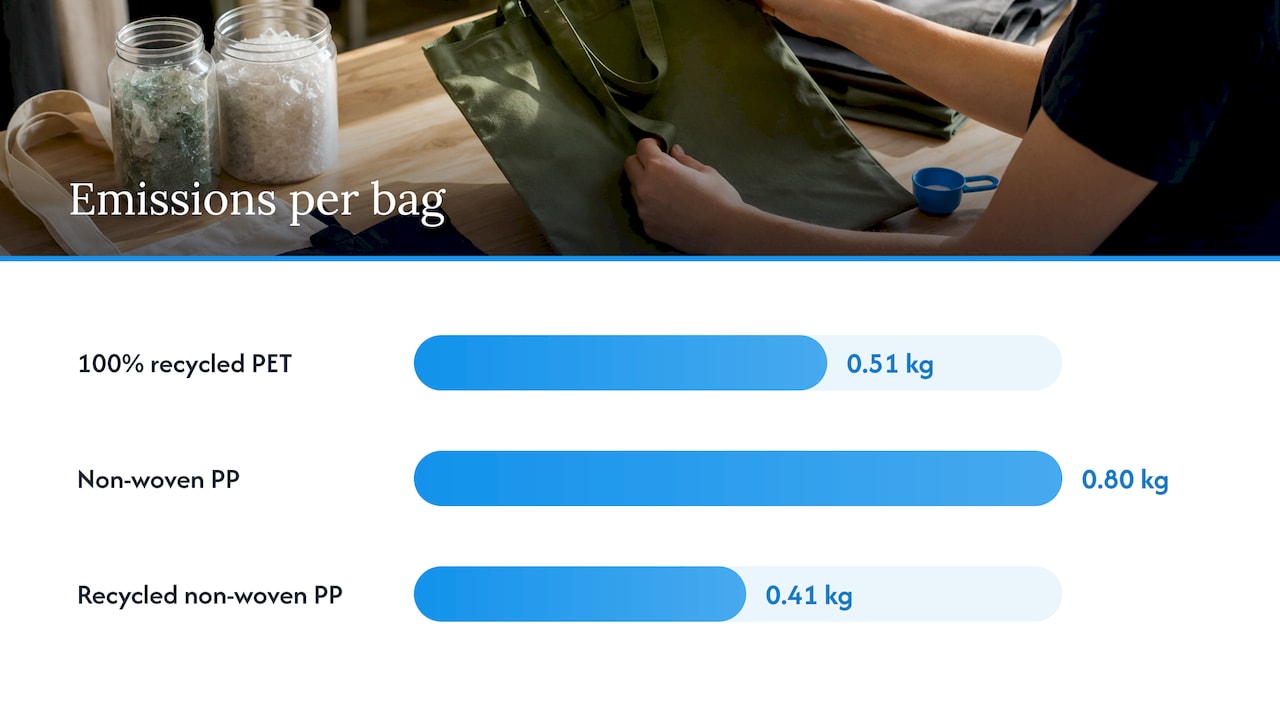
Where cotton fits
Cotton is a natural fibre, and it is made to be used for a long time. The UN Life Cycle Initiative’s meta-study estimates a cotton bag needs 50 to 150 uses to have less climate impact than a single-use plastic bag, against an estimated 10 to 20 uses for a thick, durable polypropylene bag. A 2018 Danish assessment found that conventional cotton outperformed organic cotton on its measures, and that woven polypropylene outperformed non-woven polypropylene. So cotton rewards a recipient who will carry the bag for years. A sturdy canvas tote with a clear, lasting logo is a good fit for exactly that. It suits staff gifts, client gifts, conference bags for repeat attendees and retail shoppers who treat the tote as a daily bag.RPET vs cotton vs non-woven: side by side
| Feature | RPET | Cotton | Non-woven |
|---|---|---|---|
| Material | Recycled polyester, often from bottles | Cotton canvas or twill | Usually spunbond polypropylene |
| Feel | Smooth, light | Soft, premium | Light, slightly rigid |
| Water resistance | Good | Absorbs moisture | Good |
| Cleaning | Wipe clean | Machine washable | Wipe clean |
| Best for | Trade shows, everyday carry, outdoor events | Long-term use, gifts, premium brands | Large giveaways, expos, short campaigns |
| Print style | Bold logos, full-colour options | Fine detail, multi-colour, embroidery | Simple one or two-colour logos |
Strength, capacity and care
Heavier cotton canvas holds heavy loads and softens with washing. A cotton tote can be machine washed, which keeps it fresh for a recipient who carries it to the gym, the market or the office. RPET fabric is easy to wipe clean and resists rain and stains. It is a practical choice for outdoor events, festivals and sports days, where a bag may meet wet weather or spills. Fabric weight still matters, so ask about the gsm (grams per square metre) before you order. Non-woven bags are light and economical. They suit a lighter load, such as a brochure pack, samples or a lunch.
A useful rule: the more weight the bag has to carry, the heavier the fabric and the stronger the handle stitching you want.
Printing and branding
The material changes how your logo looks.- Cotton takes fine detail well. Multi-colour artwork, small text and illustration all work. It also suits a premium look.
- RPET suits bold, clear logos and full-colour designs. A simple mark on a plain colour reads well from a distance.
- Non-woven gives its best result with a simple one or two-colour logo. Large lettering and clear messages work best.
What affects the price
Several factors set the price per bag, whichever material you choose:- Quantity. Larger runs lower the cost per bag.
- Fabric weight. A heavier fabric costs more than a light one.
- Number of print colours. Each added colour, a larger print area or double-sided printing adds cost.
- Print method. Simple screen printing is usually the most economical for bulk orders. Embroidery and detailed full-colour work cost more.
- Bag features. Gussets, zips, pockets, longer handles and inner linings all add to the price.
- Turnaround. Faster delivery can mean a faster production slot.
Choosing by use
Trade show or expo giveaway. You want a visible logo, low cost and a bag people will carry around the venue. Non-woven or lightweight RPET both work well. Corporate conference. Attendees carry materials and often reuse the bag at work. A canvas tote or a durable RPET bag gives your brand a longer life. Client gift. A cotton tote with a clean, detailed logo feels considered. It pairs well with other items from our corporate gifts and awards range. Outdoor event or sports day. RPET is a practical choice, as it resists water and wipes clean. Retail or supermarket-style carry. Reusable bags win on reuse. Choose a strong bag with reinforced handles. Food and market use. Cotton and RPET are both common choices, and both wash or wipe clean. If your goal is a wider sustainable range, our eco-friendly promotional products guide shows other items that sit well alongside a bag.Making eco claims you can stand behind
A bag with recycled content is a real step forward, but the wording on your campaign matters. Australian retail guidance warns that calling a plastic-based bag an “eco bag” without clear qualification risks greenwashing complaints from customers. Three habits keep your claims safe:- State what the bag is made of, for example “made from recycled PET bottles”.
- State the recycled content you can confirm, not a rounded or guessed figure.
- Avoid vague words such as “green” or “planet friendly” unless you can explain them.
Our view on bag materials
We source factory-direct through a global supply chain, and we have been supplying branded merchandise in Australia for over 25 years. In that time the question has not changed: which bag will your audience keep using? We do not think one material wins every time. RPET gives you recycled content, light weight and water resistance. Cotton gives you a premium feel and fine print detail. Non-woven gives you reach when you need volume. Each is a good answer when it fits the brief. The evidence supports that approach. Reuse drives the result, so we encourage you to choose the bag that will be carried most. Tell us who receives it and how they will use it, and we will recommend the format. Our free artwork service means your logo is prepared for the fabric you choose, and our Price Beat Guarantee keeps the price competitive. PromoShop
Order your bags with us
We offer custom branding, free artwork and an express service across our promotional bags range, covering cotton, non-woven and other formats. Send us your quantity, your logo and your deadline, and we will recommend a material and quote. If you want to start with a bag type, browse our bags collection, or get in touch and we will help you choose.