
November 21, 2026
rPET stands for recycled polyethylene terephthalate. It is PET plastic, the clear plastic in most drink bottles, that has been collected, cleaned and turned into new material. For a business buying branded merchandise, rPET usually means a bag, cloth, cap or shirt made from fibres that started life as used plastic bottles. We offer rPET products, including an RPET microfibre cleaning cloth, and we add free artwork design to branded orders.
This guide explains the term in plain words. It shows how rPET is made, how it differs from PET, and what you can say about it on your own products.
TL;DR
- rPET is recycled PET: used PET packaging that is collected, sorted, cleaned and reprocessed into new material.
- The chemistry is the same as virgin PET. The difference is the source, and recycled batches can vary more than new plastic.
- In Australia, clear PET packaging averaged 33% recycled content in 2022–23, the highest of any plastic packaging type.
- On merchandise, rPET shows up mostly as polyester fabric for bags, caps, apparel and cloths.
- Describe it precisely. The ACCC expects environmental claims to be true, accurate and backed by reasonable grounds.
Table of Contents
- What rPET means
- PET and rPET: what is the difference?
- How used bottles become rPET
- Where rPET is made in Australia
- What products use rPET
- Why businesses choose rPET merchandise
- How to describe rPET products honestly
- How to choose an rPET promotional product
- Promo: rPET merchandise with your logo
- Our view on rPET
- FAQ
What rPET means
The name has three parts.
- PET is polyethylene terephthalate. It is a linear thermoplastic polyester made from ethylene glycol and terephthalic acid, according to a 2022 peer-reviewed review of PET bottle recycling.
- Thermoplastic means it softens when heated and can be melted and shaped again. That is why it can be recycled.
- The “r” means recycled. The material comes from used PET, not fresh oil-based feedstock.
So when you ask what rPET is, the short answer is this: it is PET that has already been used once and has been given a second life.
You will also see “PET” on the base of bottles with the number 1 inside the recycling triangle. That marking is the “PET recycle” symbol people search for. It names the plastic type. It does not on its own say a product contains recycled material.
PET and rPET: what is the difference?
Chemically, they are the same polymer. The difference is where the material comes from and how consistent it is.
Virgin PET is made fresh in a controlled process, so each batch is very similar. Recycled PET starts from collected bottles. The review above explains that post-consumer feedstock varies from lot to lot, so processing is less repeatable than with virgin PET. Recyclers manage this by sorting, washing and testing carefully.
In practice, the difference for a buyer comes down to two points:
| Virgin PET | rPET | |
|---|---|---|
| Source | New raw materials | Used PET, mainly bottles |
| Polymer | Polyethylene terephthalate | Polyethylene terephthalate |
| Batch consistency | Very consistent | Depends on sorting and processing |
| Emissions | Higher | Lower: the Australian Packaging Covenant’s guide says replacing virgin PET with rPET may cut greenhouse gas emissions by 50% |
That saving is a range and depends on the process and the product. Treat it as a guide, not a promise for every item.
How used bottles become rPET
The path from kerbside bin to new material has a few clear stages.
- Collection. Bottles come back through kerbside recycling and container deposit schemes. Bottles from deposit schemes tend to be cleaner. Exchange for Change’s Ms Smalley told ABC News that they have far less contamination than kerbside bottles.
- Sorting. Clear PET is separated from other plastics and from coloured PET. Australian bale specifications for food-grade rPET exclude coloured PET and non-food bottles.
- Washing and flaking. Bottles are washed and shredded into small flakes.
- Reprocessing. Flakes are melted and made into pellets, or spun into fibre.
There are two main ways to reprocess. Mechanical recycling cleans, shreds and melts the plastic. Chemical recycling breaks PET into its building blocks so it can be rebuilt. CSIRO’s 2021 advanced recycling report names glycolysis as the simplest chemical method for PET. It also notes the output can be discoloured and need more clean-up.
PET is also the packaging plastic that recycles back into itself most successfully. ABC News reported that uncoloured clear PET packaging in Australia averaged 33% recycled content in 2022–23, up from 14% in 2018–19.
Where rPET is made in Australia
Australia has local capacity. Circular Plastics Australia runs plants in Albury, New South Wales and Altona North, Victoria. It says each plant recycles the equivalent of about 1 billion 600 ml bottles a year. The Victorian Government reports that a Dandenong South plant can process 40,000 tonnes of post-consumer PET bottles a year.
Most of this food-grade rPET goes back into beverage bottles, food trays and similar packaging. Fibre for textiles is a separate use of the same plastic family.
What products use rPET
In everyday life you will meet rPET in three places.
- Bottles and food packaging. Bottle-to-bottle recycling is the best-known use. The PMC review says bottles with 100% post-consumer recycled PET are available mainly for cold-fill drinks such as still water, chilled juice and milk.
- Textiles. PET is polyester. Recycled bottle flakes can be melted, spun into yarn and woven or knitted into fabric. This is the route into apparel and soft goods.
- Promotional merchandise. Bags, caps, shirts, towels and cleaning cloths can all be made with recycled polyester.
For most buyers of branded goods, the third group is the one that matters. A bag or cloth carries your logo into a customer’s home, office or car for months. When it is made from recycled fibre, it also tells a story about your values.
We stock rPET options in our promotional range. You can see the RPET microfibre cleaning cloth and browse promotional bags and drinkware for other lines.

Why businesses choose rPET merchandise
Three reasons come up most often with small business owners, event planners and marketing teams.
It gives a giveaway a reason to be kept. A useful item stays on a desk or in a bag. A useful item made from recycled material gives the receiver a second reason to feel good about it.
It supports your own sustainability message. If your business already talks about waste or responsible sourcing, a recycled-fibre item fits that story. A bag handed out at a conference shows it, rather than just stating it.
It lowers the footprint of the material. The Packaging Covenant guide estimates a cut of up to 50% in emissions when rPET replaces virgin PET. Figures for finished textiles depend on the product, so ask for the data on the specific item.
How to describe rPET products honestly
This is the part many buyers skip. A recycled claim on your merchandise or your campaign is your claim, not just the supplier’s. Australian rules apply.
The ACCC says environmental claims must be true, accurate and based on reasonable grounds. Its example: if a bottle is recycled but its cap and outer packaging are not, a broad claim of no harm to the environment is likely to mislead. You should say which parts are recycled.
The ACCC also warns about the looping arrows symbol. Without an explanation, it can suggest that the whole product and its packaging are recycled, recyclable, or both.
The Australasian Promotional Products Association gives practical advice for the industry. It recommends specific wording such as “made from 80% post-consumer recycled PET” rather than “made from recycled materials”. It also advises keeping certification, supplier data or testing records on file. Its guidance on avoiding greenwashing is a good read before you write copy.
A simple checklist:
- Name the material. Say “recycled polyester (rPET)”, not just “eco-friendly”.
- State the share. Give the recycled percentage if you know it.
- Say what it covers. Fabric only, or fabric plus trims and packaging?
- Separate pre-consumer and post-consumer. The Packaging Covenant guide asks for recycled-content claims to make this distinction. Post-consumer means it was used by people before collection.
- Keep the evidence. Hold supplier data or test reports for the item.
- Skip vague words. “Green”, “planet-friendly” and similar terms are hard to prove.
For wider campaign wording, this environmental messaging checklist covers how to plan sustainability communication.
When you order from us, tell us you plan to make a recycled claim. Then we can help you word it to match the product.
How to choose an rPET promotional product
Pick the item first, then the material.
- Think about the use. A cleaning cloth for screens and glasses, a tote for a trade show and a cap for a sponsored event all suit different audiences.
- Match the audience. Staff gifts, client gifts and event giveaways each call for a different level of quality.
- Check the print area. Fabric items give you a defined space for your logo. Send us your logo and our team will prepare the artwork for free.
- Plan the timing. If an event is close, ask about our express service.
- Order a sensible quantity. Count your audience, add a small buffer and ask about quantity breaks.
Promo: rPET merchandise with your logo
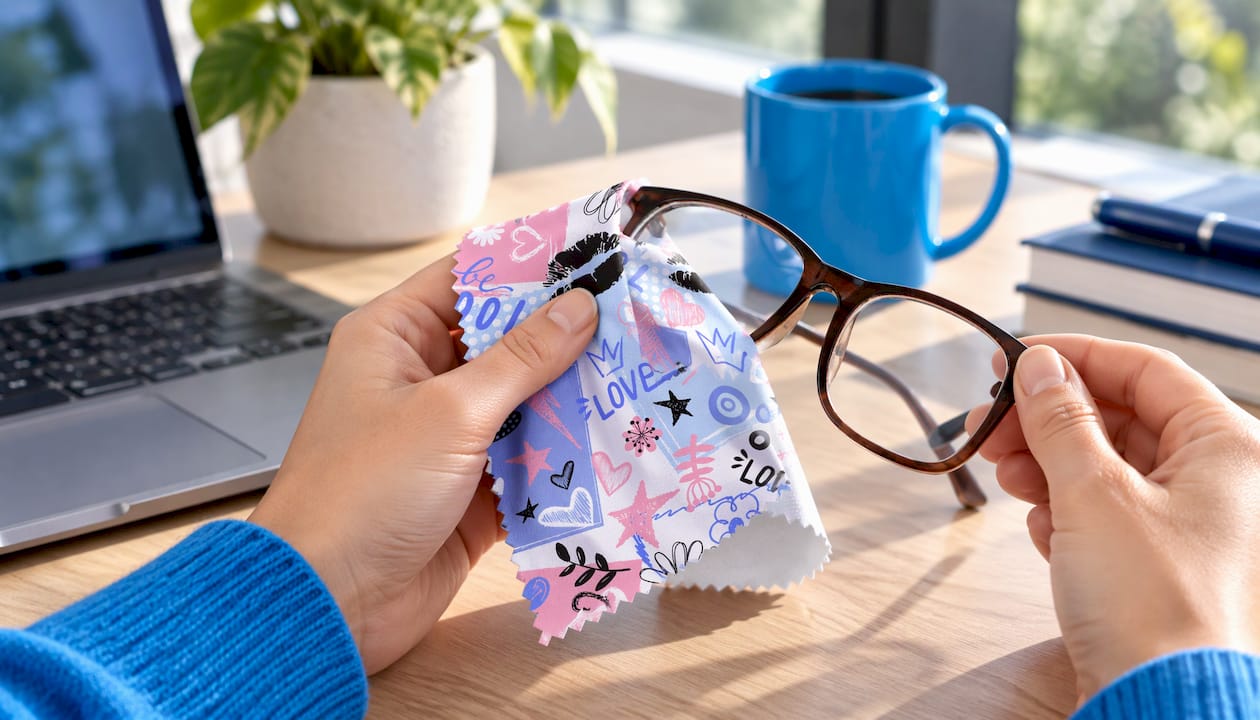
If you want recycled material on your next giveaway, start with the RPET microfibre cleaning cloth. It is a practical item that people use often. We also offer custom branding, free artwork design, express service and a Price Beat Guarantee across our range.
You can also browse the full range on the PromoShop home page or get in touch. We are here to assist.
Our view on rPET
We have supplied branded merchandise to Australian businesses for over 25 years. Our view is simple. A promotional product should be useful first, and it should say something good about the business that gave it away.
rPET helps with the second part. It turns a material that was once packaging into something a customer keeps. That is a message people can see and touch.
We source factory-direct through a trusted global supply chain. That helps us keep quality consistent and prices competitive. When recycled material is part of your brief, we can show you the options in our range.
Our advice is to be specific. Say what the product is made from. Say what it is not. Clear claims build trust, and trust is what a branded gift is for.
PromoShop
FAQ
What does rPET stand for?
rPET stands for recycled polyethylene terephthalate. It is PET plastic that has been collected, sorted, cleaned and reprocessed into new material. The “r” is the only difference in the name.
What is the difference between PET and rPET?
Both are the same polymer. PET is made from new raw materials. rPET is made from used PET, mostly bottles. Recycled batches can vary more than new plastic, so careful sorting and processing matter.
What does “PET recycle” mean?
PET is the plastic type, marked with the number 1 on many bottles. “PET recycle” means the plastic can be collected and reprocessed through recycling systems. Mechanical recycling sorts, washes and dries PET, then melts it into pellets, as the PMC review describes.
Is rPET used for clothing and bags?
Yes. Because PET is a polyester, recycled PET can be spun into yarn and made into fabric. That fabric is used in apparel, bags and soft goods, including promotional merchandise.
Can I call my merchandise “recycled”?
Yes, if the claim is true and you can support it. The ACCC expects claims to be accurate and based on reasonable grounds. Name the material, state the share if you know it, and say which parts of the product it covers.