

September 24, 2026
For VIP clients and executives, rigid magnetic or drawer boxes give the strongest premium impression. For distributed teams and recurring gifting programmes, foldable rigid boxes or mailers cut freight costs without looking cheap. Budget roughly $8 to $45 per unit depending on finish and volume, with samples ready in 5 to 7 business days. Some suppliers can provide both formats with artwork services and express turnaround options.
 Quiet branding, a small debossed or foil logo rather than a large printed mark, reads as more premium and encourages recipients to keep and reuse the box rather than binning it. That reuse is a quiet win for brand recall long after the gift itself is gone.
Before you send a brief, confirm:
If your deadline is tight, Express Service is built for exactly that squeeze, whether it’s an executive gift due Friday or a swag box for clients ahead of an event. A tin of tees or a set of branded bag tags can turn a standard box into something worth photographing, and both slot straight into rigid or foldable formats already covered above. Head to the Promoshop enquiry page to request a quote and a golden sample, and get your artwork proof back before you sign off on volume.
TL;DR:
- Rigid magnetic and drawer boxes are best for VIP clients and awards, while foldable rigid boxes save on freight and storage costs for large shipments.
- Branding methods such as spot UV and debossing create a more premium look and encourage reuse, boosting long-term brand recall.
- Sustainability relies on FSC-certified, recycled, or mono-material options, with eco-friendly inks and adhesives, which can add a modest premium.
- Inserting biodegradable or foam dividers and running transit tests enhance the unboxing experience and protect fragile contents during delivery.
- Precise, detailed briefs on artwork, quantities, and deadlines help prevent costly errors and delays in corporate gifting projects.
Table of Contents
- What are the main types of corporate gift packaging?
- How should you brand and customise the box?
- Which materials meet sustainability requirements?
- How do inserts and dividers protect the contents?
- What order size and box style should you plan for?
- What drives cost and how long should you budget?
- How do you brief a packaging supplier properly?
- What actually goes wrong on corporate gifting projects?
- Get free artwork, a golden sample and a fast quote from Promoshop
- FAQ
What are the main types of corporate gift packaging?
Format decides everything else: what it costs, how long it takes to produce, and how it lands on a client’s desk. Get this choice wrong and no amount of foil stamping will fix it.- Rigid magnetic and drawer boxes suit VIP clients, executive onboarding kits and awards. They feel substantial, reuse well, and justify a higher spend per unit.
- Foldable rigid boxes and sleeve-and-tray sets hold the same premium look but flatten for shipping. Foldable rigid designs cut freight and storage costs when you’re sending hundreds rather than dozens.
- Mailer boxes work best for remote staff and ongoing gifting cycles. They arrive through standard courier networks without dented corners.
- Branded bags cover events, conferences and walk-away swag, including a shoe bag for a golf day or offsite where guests need somewhere to stash gear.
How should you brand and customise the box?
Four application methods cover almost every corporate box you’ll brief: digital print, hot foil, blind deboss and spot UV. Print has the lowest setup cost and suits full-colour artwork or photography. Hot foil needs a metal die, a one-off tooling cost, but delivers a metallic finish clients associate with premium brands. Blind deboss presses your logo into the board with no ink at all, and it performs best on soft-touch matte stock. Spot UV adds a glossy layer over a matte base for contrast without colour.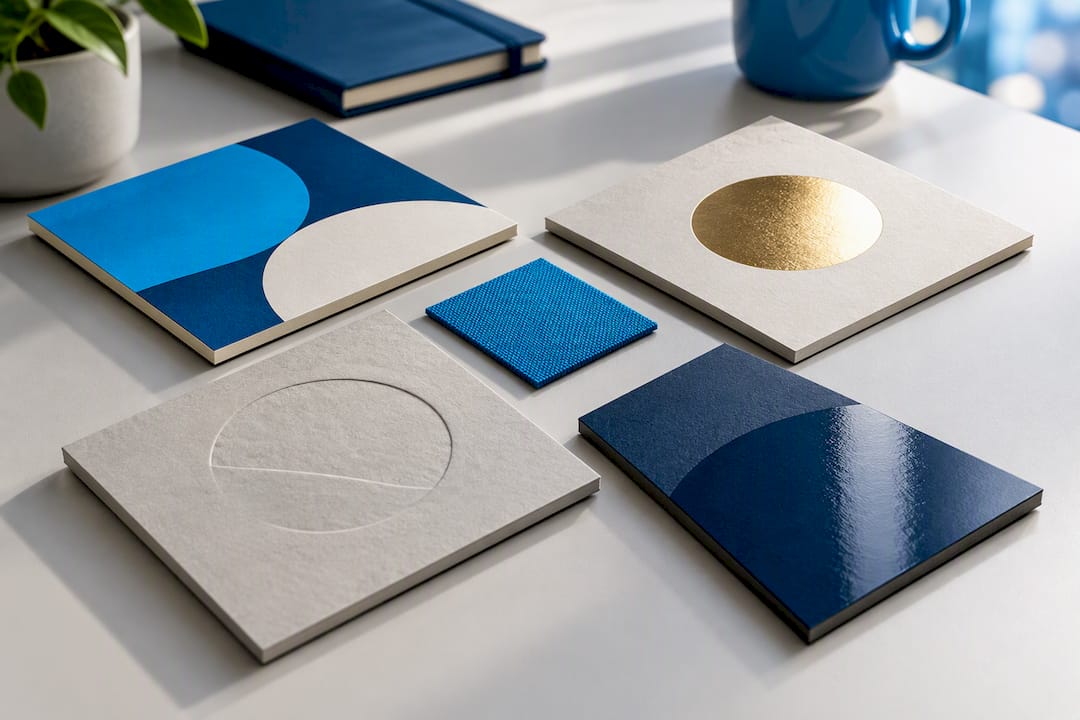 Quiet branding, a small debossed or foil logo rather than a large printed mark, reads as more premium and encourages recipients to keep and reuse the box rather than binning it. That reuse is a quiet win for brand recall long after the gift itself is gone.
Before you send a brief, confirm:
- Vector artwork (AI or EPS, not a low-res logo pulled from a website).
- PMS colour matching so your brand blue doesn’t drift between print runs.
- Logo scale and panel selection, matched to where the box will actually sit on a shelf or desk.
- A golden sample approved in writing before full production starts.
Which materials meet sustainability requirements?
FSC-certified board, recycled greyboard and mono-material construction now sit at the centre of most corporate packaging briefs, not the edge. Mono-material designs avoid the mixed-material windows and laminates that make boxes hard to recycle, and they’re an easy line to add to an ESG report.- FSC-certified or recycled-content board, with a certificate you can file for procurement records.
- Plant-based inks and water-soluble adhesives instead of solvent-based alternatives.
- Ribbon or window inserts in the same material family as the box itself, so the whole thing goes in one recycling stream.
How do inserts and dividers protect the contents?
The insert, not the outer box, is usually what makes a gift feel engineered rather than assembled. Die-cut paperboard is cheap and works for light, flat items. EVA foam protects fragile or oddly shaped items like glassware or electronics but costs more to tool. Moulded pulp sits between the two, biodegradable and firm enough for mid-weight items, though it takes longer to produce than paperboard.- Design the reveal: hero item centred and face-up, smaller items tucked beneath or to the side.
- Put your key message, a card or a thank-you line, on the underside of the lid so it’s the first thing seen.
- Run a transit test on your sample before signing off. A choreographed reveal signals thoughtfulness far more than the price tag ever does, and a rattling box undoes that in one shake.
What order size and box style should you plan for?
Minimum order quantities shift depending on how complex the build is, not just the box count. A simple printed mailer might start around 50 units. Add a custom die-cut insert or foil tooling, and practical minimums often climb toward 100 to 250 units to make the setup cost worthwhile.- Start with a pilot run using flexible or off-the-shelf inserts if you’re testing a new gifting programme.
- Move to moulded or die-cut inserts once volumes stabilise, since tooling costs amortise better across larger production runs.
- Choose foldable rigid boxes over one-piece rigid construction once you’re shipping to multiple offices or regions, the freight savings compound quickly.
- Segment SKUs by tier, employee, manager, VIP, so procurement can order in batches without redesigning the box each time.
What drives cost and how long should you budget?
Box type, finish, tooling and insert complexity are the four levers that move your quote up or down, usually in that order. A plain kraft mailer with a one-colour print costs a fraction of a rigid magnetic box with foil stamping and a foam insert, and volume brings the per-unit price down faster than any other single change.- Sample lead times typically run 5 to 7 business days once artwork is finalised.
- Production runs commonly take 2 to 4 weeks from approved golden sample to delivery.
- Rush options exist with most suppliers but usually carry a premium, worth confirming before you commit to a client deadline.
How do you brief a packaging supplier properly?
A tight brief is the single biggest lever you have over both price and turnaround. Suppliers quote faster and more accurately when the request is specific, and vague briefs are the number one cause of delayed corporate gifting programmes.- List every item going in the box, with dimensions, so the supplier can size the insert correctly the first time.
- State your preferred finish (foil, deboss, print) and any sustainability requirements up front, not after the first quote comes back.
- Confirm quantities, delivery addresses (including multi-address or drop-ship needs) and your hard deadline.
- Ask directly about the sample process, QC checks, tooling costs and how long golden-sample approval takes.
- Get internal sign-off on the sample before production starts, this single step prevents almost every late-stage schedule blowout.
What actually goes wrong on corporate gifting projects?
The mistakes that sink a gifting programme are rarely about the box itself. They’re about timing and files. Briefs that land three weeks before a deadline force rushed decisions. Low-resolution logos pulled from a website footer end up blurry or pixelated once blown up to box size. And skipping the sample stage to save a week almost always costs more time later, when 500 units arrive with the wrong PMS colour. The choices that pay off are almost always the quiet ones: a small debossed logo instead of a loud print, a box sturdy enough to be reused as a desk organiser, and an insert simple enough that nothing rattles in transit. None of that shows up on a spec sheet, but it’s what a recipient actually remembers, and premium unboxing has a measurable effect on how a gift is perceived well after the moment it’s opened.— PromoShop
Get free artwork, a golden sample and a fast quote from Promoshop
Certain suppliers combine factory-direct sourcing with a global supply chain to offer consistent quality. Some offer free artwork design services to assist with logo placement, PMS colours, and panel layout before production, and may provide price beat guarantees when you have a competitor’s quote.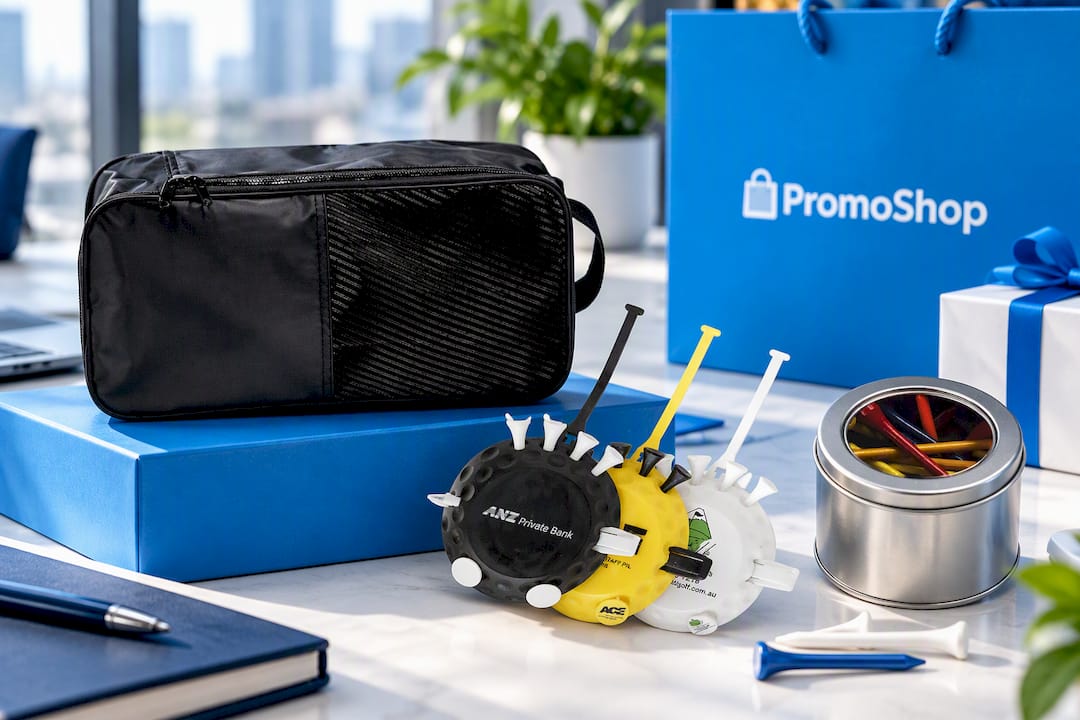 If your deadline is tight, Express Service is built for exactly that squeeze, whether it’s an executive gift due Friday or a swag box for clients ahead of an event. A tin of tees or a set of branded bag tags can turn a standard box into something worth photographing, and both slot straight into rigid or foldable formats already covered above. Head to the Promoshop enquiry page to request a quote and a golden sample, and get your artwork proof back before you sign off on volume.